


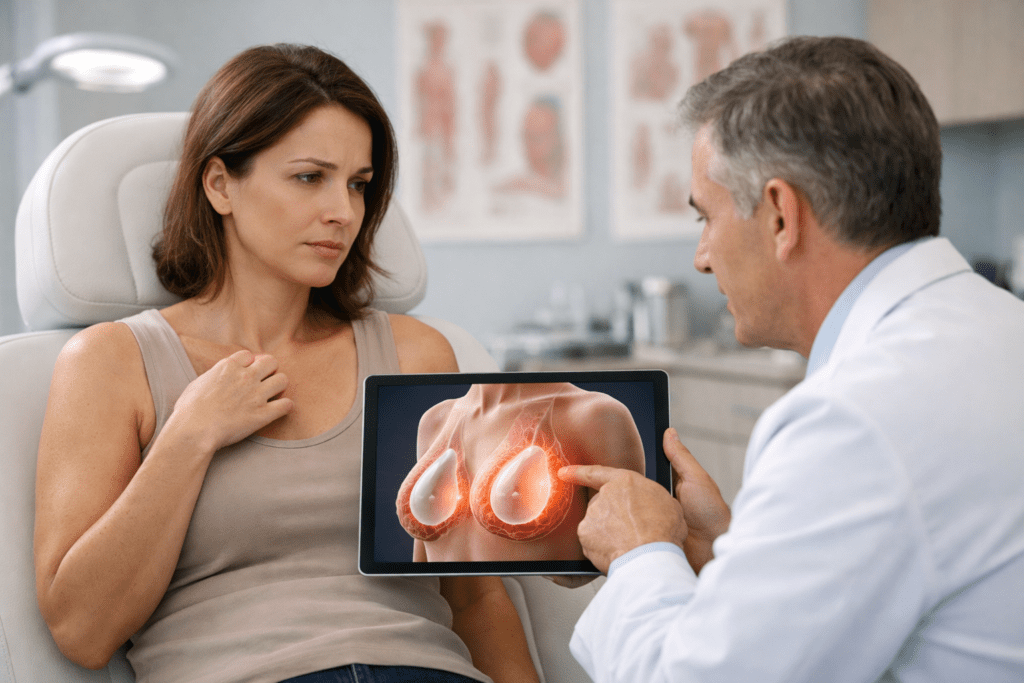
If you have breast implants illness and have been dealing with unexplained fatigue, joint pain, brain fog, or a range of other symptoms that no doctor has been able to explain, you are not alone. Thousands of women across the United States have reported similar experiences, and many have traced them back to their breast implants.
Breast implant illness (BII) is a growing area of concern in plastic surgery, backed by increasing patient reports, FDA data, and peer-reviewed research. This guide covers everything you need to know: what BII is, what symptoms to look for, what the science says about causes, how it is diagnosed, and what your treatment options are, including breast implant removal.
What Is Breast Implant Illness (BII)?
Breast implant illness (BII) is a term used to describe a wide range of symptoms, including chronic fatigue, joint pain, brain fog, and skin problems, that some people develop after getting breast implants. These symptoms are systemic, meaning they affect the whole body rather than just the area around the implant.
BII can affect anyone with breast implants, regardless of whether they have silicone or saline implants, textured or smooth surfaces, or whether their implants are intact or have ruptured. Symptoms can appear shortly after implant surgery or show up years later.
It is also referred to by other names, including silicone implant illness and autoimmune/inflammatory syndrome induced by adjuvants (ASIA syndrome). While BII is not yet recognized as an official medical diagnosis, it is increasingly recognized by plastic surgeons, the FDA, and major medical institutions as a real and serious patient experience.
Breast Implant Illness Symptoms: A Complete List
BII symptoms vary from one patient to the next, which is part of what makes it so hard to pin down. Through its Medical Device Reporting (MDR) system, the FDA has collected data on more than 50 reported symptoms linked to breast implant illness, covering everything from physical pain to mood changes to hair loss. Below is a breakdown by category.
Systemic and Constitutional Symptoms
- Chronic fatigue and exhaustion
- Unexplained weight changes
- Low-grade fevers and night sweats
- General feeling of being unwell
- Swollen lymph nodes
Fatigue shows up more than any other complaint in the FDA’s database, it appears in 41.1% of all adverse event reports tied to breast implant illness.
Musculoskeletal Symptoms
- Joint pain and stiffness
- Muscle aches and weakness
- Breast pain
- Chest tightness
Joint-related problems are second only to fatigue, appearing in 30.9% of FDA reports among patients with breast implants who reported systemic symptoms.
Cognitive Symptoms
- Brain fog and difficulty thinking clearly
- Memory loss and trouble concentrating
- Headaches and migraines
- Dizziness
Cognitive symptoms are often what finally push patients to look for answers. When someone who used to be sharp starts struggling to remember words mid-sentence or loses track of simple tasks, it is alarming, and easy to misattribute to stress, age, or anxiety.
Autoimmune and Skin-Related Symptoms
- Skin rashes and hives
- Hair loss
- Dry eyes and dry mouth
- Anxiety (reported in 22.9% of cases)
- Depression (reported in 16.9% of cases)
- Signs or diagnosis of autoimmune disease (22.6%)
Key fact: Patients never experience the exact same collection of symptoms. If you have breast implants and several of these symptoms have appeared without a clear explanation, that pattern alone is worth bringing up with a board-certified plastic surgeon.
What Causes Breast Implant Illness?
Researchers are still working to understand the exact cause of breast implant illness. However, several biological mechanisms have been identified as likely contributors.
Autoimmune or Inflammatory Response
The leading theory is that BII may stem from an autoimmune or inflammatory reaction to the breast implant itself. For most people, the body tolerates an implant without issue. But for a subset of patients, the immune system appears to flag the implant as something foreign and never fully stands down. That ongoing, low-level immune activation can eventually produce the kind of widespread, multi-system symptoms that define BII.
A Harvard-affiliated plastic surgeon described it this way: the implant acts as a trigger, setting off what is most likely an autoimmune or inflammatory response in people who are genetically predisposed to it.
Bacterial Biofilm on the Implant
A 2024 study published in Microorganisms, the largest of its kind, analyzed 694 consecutive explant capsule samples using advanced DNA testing. The results were striking: 29% of the capsules contained bacterial contamination, and 103 different bacterial species were identified across the samples.
Around the same time, researchers publishing in the Journal of Clinical Investigation found that bacterial biofilm on implant surfaces produces a molecule called 10-HOME. This molecule appears to trigger a pro-inflammatory immune response that spreads throughout the body, not just around the implant. For the first time, scientists have a plausible biological explanation for how something sitting in your chest can make your whole body feel sick.
Implant Type Does Not Determine Risk
This is a common misconception worth clearing up. BII symptoms have been reported with every type of breast implant: silicone-filled, saline-filled, smooth, textured, round, and teardrop. Having a newer implant or an intact one does not appear to protect against BII. The implant material alone does not determine who develops symptoms and who does not.
How Common Is Breast Implant Illness?
There is no definitive prevalence figure for BII, and anyone who gives you a firm percentage is working with incomplete data. What we do know is that the majority of women with breast implants never develop BII. More than 400,000 breast augmentation procedures are performed in the U.S. each year, and most of those patients never report systemic symptoms.
Still, the numbers that do exist are hard to ignore. Between January 2008 and June 2024, the FDA received more than 10,000 medical device reports describing systemic symptoms in women with breast implants. The average gap between implant surgery and the start of symptoms was 5.6 years, though some patients notice changes almost immediately, while others do not for decades.
BII does not happen to everyone with implants. But when it does happen, the effect on daily life can be serious. Better awareness, driven by patient communities, media coverage, and social media groups, has helped more women recognize that what they are experiencing may be connected to their breast implants rather than some mystery illness.
How Is Breast Implant Illness Diagnosed?
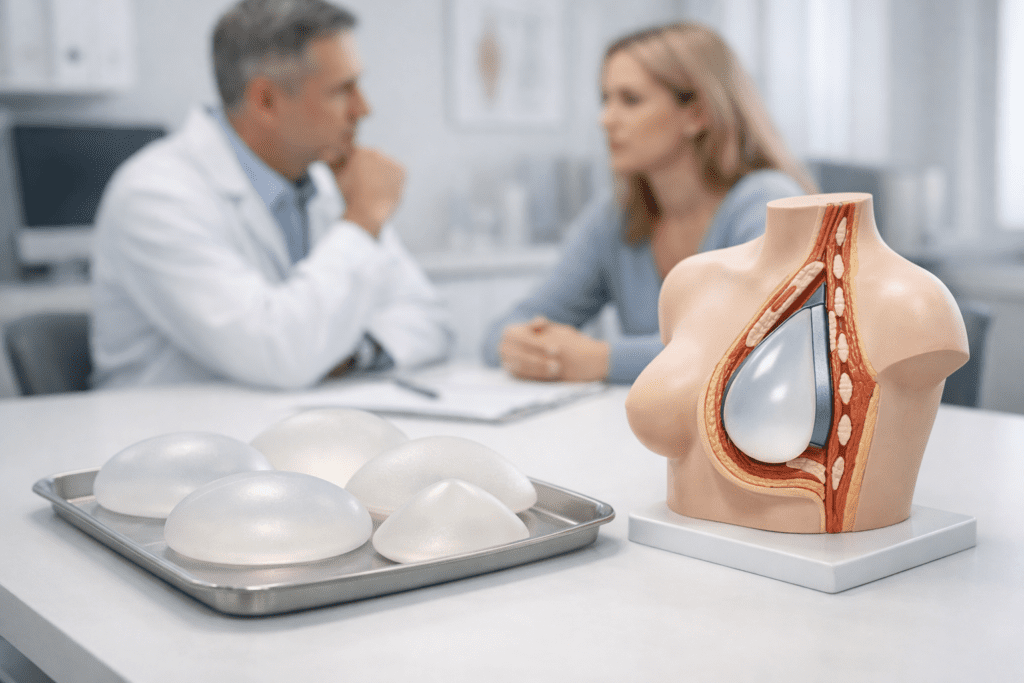
Right now, there is no standard diagnostic test for breast implant illness. There is no blood panel, no imaging study, no single marker that confirms it. BII is what doctors call a diagnosis of exclusion, meaning the process involves ruling out everything else before landing on BII as the explanation.
Does Breast Implant Illness Show Up in Blood Work?
Standard blood tests will not show BII directly. That said, your doctor will likely order labs and other tests to check for conditions that cause similar symptoms, such as:
- Autoimmune conditions (lupus, rheumatoid arthritis, Sjogren’s syndrome)
- Thyroid disorders
- Lyme disease
- Connective tissue disorders
- Chronic fatigue syndrome
This process matters because some patients turn out to have one of these conditions alongside BII, or instead of it.
What a Plastic Surgeon Will Do
A plastic surgeon who has experience treating BII will sit down with you and go through your full symptom history, not just your breast implant history. They want to understand the timeline: when symptoms started, how they have changed, and what has already been ruled out. Imaging may be ordered to assess the condition of the implant and the capsule surrounding it.
One thing that comes up repeatedly from patients is that they spent years bouncing between specialists before finding anyone who connected the dots. If you have been dismissed before, that does not mean BII is not the answer, it often just means you have not yet found the right doctor.
In 2021, the FDA required breast implant manufacturers to include systemic symptom warnings on implant packaging and a patient decision checklist to be reviewed before surgery. That step was a formal acknowledgment that BII-related concerns are legitimate and need to be part of every informed consent conversation.
Treating Breast Implant Illness: Is Implant Removal the Answer?
For many patients with BII, breast implant removal, also called explant surgery, is the treatment that makes the biggest difference. Research published in Nature Scientific Reports (2022) showed measurable improvement in BII symptoms following explant. FDA adverse event data tell a similar story: among patients who reported their outcomes after removal, 87% reported improvement in symptoms, with many experiencing partial or complete resolution.
That is a significant number. But it is also worth being honest that implant removal does not work for everyone.
Surgical Options for Implant Removal
A plastic surgeon may recommend one of three approaches depending on your situation:
- Implant removal alone: the implants come out, but the surrounding scar tissue (the capsule) is left in place
- Implant removal with capsulectomy: the implant is removed along with part or all of the fibrous capsule that naturally forms around the implant over time
- En bloc capsulectomy: the implant and the entire capsule are removed together as one intact unit, which many BII-treating surgeons prefer because it avoids disturbing the contents of the capsule during removal
Which option is appropriate depends on your anatomy, how the capsule appears on imaging, and your surgeon’s clinical judgment. Surgeons who specialize in treating BII, including those listed through Top Plastic Surgeons USA, can walk you through what each option actually means for your specific case.
What Happens After Removal?
Recovery is not the same for everyone. Some patients notice improvement within the first month. Others see gradual changes over the following three to six months. A smaller group does not see the improvement they hoped for, which is why having an honest pre-surgical conversation matters.
After removal, you have several paths forward: going flat, breast reconstruction using your own tissue through flap surgery or fat grafting, or simply waiting to see how you feel before making any further decisions. Plastic surgeons generally advise against replacing BII-affected implants with new ones, as there is a real chance symptoms will return.
Does Insurance Cover Breast Implant Removal for BII?
It depends on why you had implants in the first place. If they were placed following a mastectomy as part of breast reconstruction, removal is usually covered by private insurance. If they were placed for cosmetic breast augmentation, coverage is far less reliable. Because BII has no official diagnosis code, surgeons typically use symptom codes, pain, implant rupture, and breathing issues to make the case for medical necessity. Some patients end up paying out of pocket, particularly if their surgeon is out-of-network.
BII vs. Breast Implant-Associated Anaplastic Large Cell Lymphoma (BIA-ALCL)
These two conditions are sometimes lumped together, and they should not be. They are completely separate.
BII is an immune and inflammatory condition, it is not cancer. Breast implant-associated anaplastic large cell lymphoma (BIA-ALCL) is a rare lymphoma that has been linked primarily to textured breast implants. The warning signs of BIA-ALCL are specific and distinct from typical BII: sudden and persistent swelling around the implant, a noticeable lump near the implant site, or fluid collecting between the implant and the capsule — particularly if this occurs a year or more after surgery.
Can breast implant illness kill you?
BII itself is not life-threatening. It can cause significant, ongoing symptoms that seriously affect how you feel and function, but it is not classified as a fatal condition. BIA-ALCL is a different matter entirely and requires prompt evaluation if warning signs appear. If you notice the symptoms described above, call your surgeon and do not wait.
The American Society of Plastic Surgeons maintains up-to-date patient information on both BII and BIA-ALCL if you want to read further.
What to Do If You Think You Have BII
If your gut tells you something is wrong, and your breast implants may be connected, here is what to do:
1. Write everything down
List every symptom, when it first appeared, and how it has changed over time. Include details about your implant surgery, the date, what type of implants were placed, and the name of the surgeon who did it. This history matters when you sit down with a specialist.
2. Find a plastic surgeon who knows BII
You want someone certified by the American Board of Plastic Surgery (ABPS) who specifically has experience evaluating and treating breast implant illness, not just performing cosmetic procedures. The surgeon who placed your implants may not be the right person to evaluate whether those implants are making you sick.
3. Push back if you are dismissed
This is not in your head. If a provider waves off your concerns without doing a proper workup, find someone else. The conversation around BII in the medical community has shifted considerably in recent years, and some doctors take it seriously.
You can find board-certified plastic surgeons with BII experience through Top Plastic Surgeons USA, a resource that helps patients connect with qualified specialists across the country.
Frequently Asked Questions About Breast Implant Illness
What does breast implant illness look like on the face?
Some patients notice visible skin changes that patient communities refer to as “BII face.” This can show up as persistent rashes, puffiness, a dull or blotchy complexion, dry skin, and hair thinning, changes that tend to be tied to ongoing systemic inflammation rather than any local reaction.
Does breast implant illness go away after removal?
For many patients, yes, symptoms improve meaningfully after explant surgery. Some people feel a difference within the first 30 to 90 days. But recovery is not guaranteed, and some patients see only partial improvement. A realistic conversation with your surgeon before surgery is important.
Does breast implant illness happen to everyone with implants?
No. Most women with breast implants never develop BII. A smaller group appears more susceptible, possibly because of how their immune system responds to implant material or to bacterial activity on the implant surface.
Are neurological symptoms common with breast implant illness?
Yes, and they tend to be among the most distressing. Brain fog, memory problems, headaches, tingling, dizziness, and trouble focusing are all frequently reported cognitive symptoms of BII, and they are often what finally drives patients to look for answers.
Can breast implant illness get worse over time?
For some patients, it does. Symptoms that start out manageable can become more pronounced over months or years. The FDA’s data puts the average time from implant surgery to symptom onset at 5.6 years, though plenty of patients notice changes earlier or later than that window.
Is there anything you can do to reduce the risk of BII before getting implants?
There is no proven prevention strategy. Before getting breast implants, it is worth having an open conversation with your plastic surgeon about your health history, particularly if you have any existing autoimmune conditions or a family history of immune-related illness. Working with a board-certified surgeon who follows careful implant placement practices is a reasonable precaution.
Still Have Questions? Here Is What Matters Most
Breast implant illness is real. It is not yet in the insurance code books, but it is supported by FDA data, peer-reviewed research, and the clinical experience of surgeons who have treated thousands of patients with these exact symptoms.
What the research makes clear is this: BII can develop with any type of breast implant, symptoms can range from fatigue and joint pain to brain fog and autoimmune flares, and for many patients, breast implant removal leads to significant improvement. The average time from implant surgery to symptom onset is 5.6 years, meaning many women spend years getting tested for conditions they do not have before anyone connects the dots.
If you have breast implants and have been dealing with unexplained systemic symptoms, the next step is a thorough evaluation with a plastic surgeon who has hands-on experience treating BII, not just performing breast augmentation. That distinction matters. You can find board-certified plastic surgeons who specialize in breast implant illness and implant removal through Top Plastic Surgeons USA, a trusted directory of qualified specialists across the country.
The sooner you get a proper evaluation, the sooner you have real answers.