


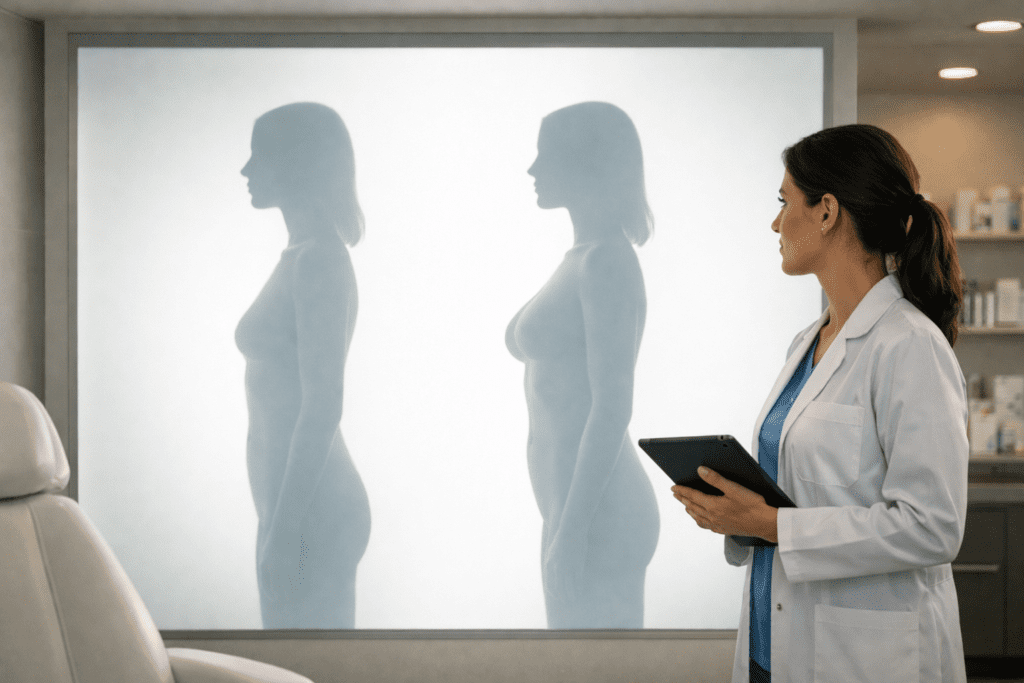
Breast augmentation is one of the most common cosmetic surgeries in the country. According to the American Society of Plastic Surgeons, over 364,000 procedures were performed in the United States in 2023 alone. Women choose it for many reasons, restoring volume after pregnancy, correcting asymmetry, or simply feeling more at home in their bodies.
What you see in the mirror afterward depends on several things: your natural breast shape, the implant type your surgeon recommends, your existing tissue, and how well the procedure is planned for your frame. This guide covers what real results look like, how the healing timeline works, and what actually affects your outcome.
What Do Real Breast Augmentation Before and After Results Look Like?
Real breast augmentation results show fuller, rounder breasts with better proportion to the rest of your body. Most patients notice improved symmetry, more volume in the upper chest, and a natural slope at the top of the breast. Incision scars are small, placed in hidden areas, and fade significantly over 12 to 24 months.
That said, results are not instant. Right after surgery, the breasts sit high on the chest and look swollen. Over the next three to six months, they settle into a more natural position, known as the “drop and fluff” process. Around the three-month mark, roundness at the bottom of the breast becomes more visible. By six months, the breasts have reached their final shape.
Before-and-after photos from real patients show a wide range of outcomes, from subtle volume restoration after weight loss or pregnancy to more noticeable size changes. The best results look natural and proportionate to the patient’s body, not overdone. If you want to see what experienced surgeons can achieve, browsing the patient galleries at Top Plastic Surgeons USA is a good starting point.
Breast Augmentation Before and After: What Changes at a Glance
Breast augmentation results change significantly over time. The table below shows how the appearance typically evolves from before surgery to the final result.
| Category | Before Surgery | After Surgery (Final Result) |
| Breast Shape | Natural size, possible asymmetry, or volume loss | Fuller, rounder, more balanced appearance |
| Upper Chest Fullness | Often flatter upper pole | Improved upper fullness depending on implant type |
| Implant Position | No implants | Settled in a natural position after healing |
| Feel | Natural tissue | Softer, more natural over time |
| Scars | None | Small, hidden scars that fade over time |
| Overall Look | Baseline body proportions | Enhanced but natural-looking body contour |
How to Read Before and After Photos the Right Way
Before-and-after photos are among the most useful tools for setting realistic expectations, but not every photo tells the full story. Here is what to pay attention to:
Timing
Photos taken one week after surgery show swelling and high implant placement. That is not the final result. Look for photos taken at least three to six months after the procedure.
Body type match
Compare yourself to patients with a similar starting point, same breast width, amount of natural tissue, and skin type. A result that looks perfect on one frame will look different on another.
Multiple angles
Front, side, and angled shots each show something different, projection from the side, upper fullness from the front, and the natural slope from an angle.
Photo quality
Consistent lighting and straightforward photography from a board-certified surgeon is a good sign. Heavily filtered or inconsistently lit photos are worth questioning.
Many practices now use 3D imaging during consultations so you can see a preview of potential results before committing to anything. It makes the whole process much clearer.
Week-by-Week Recovery: When Do Results Actually Show?
Recovery follows a fairly predictable pattern, though every patient heals at their own pace.
Week 1: Breasts are swollen and sit high on the chest. Bruising is normal. You will wear a surgical bra and need to rest. Most patients manage discomfort with prescribed pain medication.
Weeks 2-3: Swelling starts to go down. Many patients return to desk jobs around day seven. The implants begin shifting downward slightly. Activity restrictions are still in place.
Weeks 4-6: Most of the swelling has resolved. The shape looks more natural. Light exercise is usually allowed after week four, with your surgeon’s approval.
Months 3-6: The “drop and fluff” phase wraps up. Implants settle fully into position, and the breast feels softer and more natural. This is when most professional after photos are taken.
Beyond 6 months: Scars continue to fade. Full scar maturation can take one to two years. What you see at this stage is your long-term result.
If you are still in the planning phase, you can find board-certified plastic surgeons across the US who specialize in breast procedures and can walk you through a personalized recovery plan.
Silicone vs Saline: How Your Implant Choice Changes the Result
The implant type you and your surgeon choose directly affects what your results look like both in photos and in everyday life.
Silicone implants are filled with a cohesive gel that feels and moves more like natural breast tissue. They tend to produce a softer upper slope and are a good fit for women with less existing breast tissue. They are the most commonly chosen option today.
Saline implants are filled with sterile salt water. They can offer slightly more upper fullness and can be adjusted in size during surgery. If a saline implant ever leaks, the body absorbs the solution safely.
Implant profile is another factor. Low-profile implants are wider and flatter. High-profile implants project further forward. This affects how results look from the side.
Fat transfer breast augmentation is a third option. It uses your own body fat, removed from the abdomen or thighs, and transfers it to the breasts. Results are more subtle, usually around one cup size increase, and look very natural. Some surgeons combine implants with fat transfer for what is sometimes called a breast augmentation with lift, a combined approach that addresses both volume and position at the same time.
Long-Term Results: What Happens to Breast Implants Over Time?
Breast implants aren’t meant to last forever. Most people find their hold up well for anywhere between 10 and 20 years, though yearly check-ins with your surgeon are a good habit to keep, just to make sure everything still looks and feels the way it should.
Your body changes over the years regardless of implants. Aging, shifts in weight, gravity, and hormonal changes all leave their mark on how your breasts look and feel over time. It’s completely normal for patients to revisit their options after several years and decide a change makes sense for them.
When that time comes, there are a few directions people typically go:
- Implant exchange: swapping out older implants for new ones, sometimes with a different size or style.
- Breast lift (mastopexy): reshaping and lifting tissue that has begun to settle lower than it once did.
- Combined procedures: pairing a lift with new implants when both volume and position need attention at the same time.
There’s also a newer approach called the “Goldilocks” procedure, which some surgeons offer to patients with more significant skin laxity who are hoping for a result that looks and feels more natural. Whether it’s the right fit really comes down to your specific anatomy and what you’re hoping to achieve, something your surgeon can walk you through in detail.
As WebMD notes in its breast implant guide, staying consistent with monitoring and maintaining an honest, ongoing conversation with your surgeon are the two things that matter most for protecting your results over the long haul.
Over time, many patients also consider how major life plans and medical journeys may influence cosmetic surgery decisions. This becomes especially important for individuals navigating emotionally demanding health journeys, such as fertility treatments and long-term family planning. Many people also wonder whether it is safe or appropriate to undergo cosmetic surgery before or after IVF, since both physical recovery and emotional well-being need to be considered. This topic is explored in Planning Cosmetic Surgery Before or After IVF: What You Should Know.
Frequently Asked Questions
How long until I see my final breast augmentation results?
Most patients see their final results between three and six months after surgery, once the implants have fully settled into place.
Will my breast augmentation results look natural?
Yes, if the implant size and type are chosen to match your body frame. A board-certified surgeon will help you pick proportionate options.
What are “Ozempic breasts,” and does augmentation help?
“Ozempic breasts” refers to volume loss in the chest that can happen with rapid weight loss on GLP-1 medications. Breast augmentation is one option to restore that lost volume.
When should I think about replacing my implants?
There is no fixed timeline, but annual exams are recommended. Most implants last 10 to 20 years before replacement becomes necessary.
Can I see real patient before-and-after photos before my consultation?
Yes. Most board-certified plastic surgeons provide a patient gallery on their website or show photos in person during your first consultation.
Does breast augmentation leave visible scars?
Incision scars are small and placed in discreet areas such as under the breast fold or around the nipple. They fade significantly within one to two years. Proper scar care after surgery helps speed this up.
Ready to See What Results Are Possible for You?
Breast augmentation results depend on your anatomy, your goals, the implant type, and the skill of your surgeon. The best way to know what is realistic for your body is to look at real patient galleries and have a one-on-one consultation with a qualified surgeon.
Most patients are satisfied with their outcome when they go in with clear expectations and choose an experienced, board-certified surgeon. The drop-and-fluff process takes patience, but for most women, the final results are worth it.
If you are in the early stages of research, browsing top plastic surgeons by state is a smart first step toward understanding what is possible for your specific situation.