


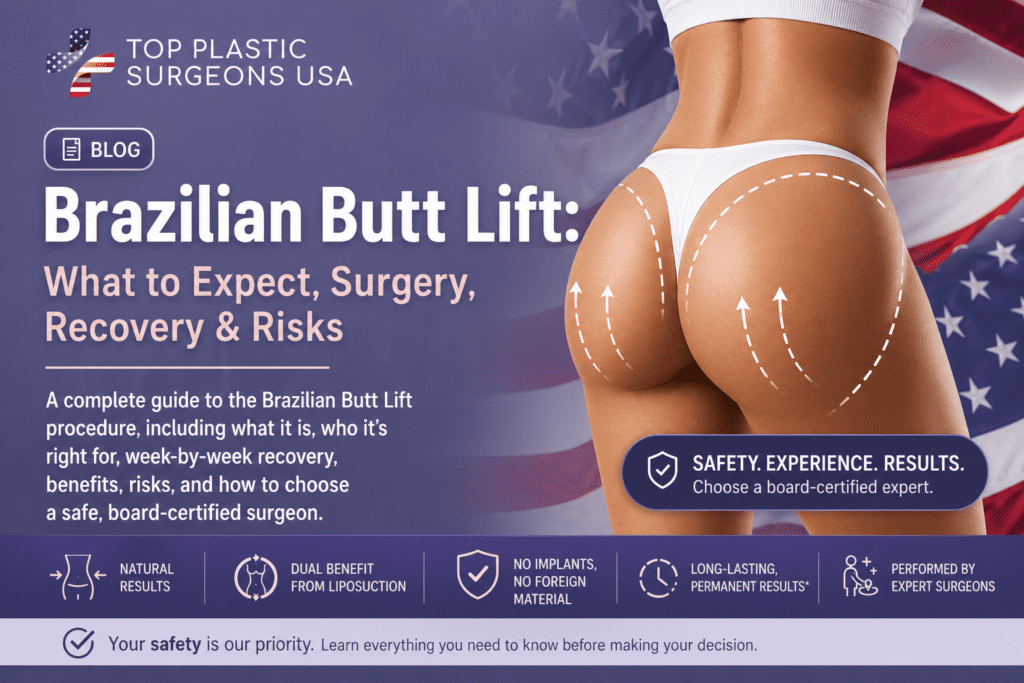
BBL The Brazilian butt lift is one of the cosmetic surgeries that is growing the fastest in the world. Every year, millions of people want a more shapely, rounder backside, and BBL gives them just that by using their own body fat instead of implants. But even though it’s very popular, it has the highest death rate of any elective cosmetic procedure. You need a clear, honest picture before you make a decision because of that difference. This guide tells you everything you need to know about the surgery: what it does, who it is right for, what recovery looks like week by week, and how to keep yourself safe by picking the right surgeon.
Overview
What is a Brazilian butt lift (BBL)?
A Brazilian butt lift (BBL) is a cosmetic surgery that reshapes and enlarges the buttocks using fat taken from your own body. The surgeon performs liposuction on one or more donor areas, typically the abdomen, flanks, thighs, or lower back, then purifies that fat and reinjects it into the buttocks in precise layers to create a more shapely, lifted shape.
The name is somewhat misleading. A BBL does not lift loose skin the way a traditional buttock lift does. Its primary goal is volume and contour. If you have significant skin laxity, your surgeon may recommend combining it with a lift procedure.
Because the filler material is your own fat rather than a synthetic implant, the results look and feel natural when done well. There is no foreign material left in your body, and there is no implant that can break or shift over time.
What does a Brazilian butt lift do to your body?
A BBL changes your body in two ways at once. First, liposuction slims the donor areas, which on its own can dramatically change your shape. Second, the transferred fat adds volume and projection to the buttocks.
The combined effect is a body that looks proportionally different, with a narrower waist, flatter stomach or thighs, and a rounder, higher-looking backside. Many patients describe the outcome as more of a full-body reshaping than a targeted buttock procedure.
Not all transferred fat survives. Roughly 60 to 80 percent of the injected fat cells will establish a blood supply and remain permanently. The rest is reabsorbed by the body over the first three to six months. Experienced surgeons account for this by slightly overfilling during surgery.
Who is a good candidate for a Brazilian butt lift?
The best candidates share a few specific characteristics.
You need enough donor fat for liposuction. Most surgeons require a body fat percentage high enough to harvest at least 300 to 500 cc of purified fat per side, though the amount varies by your goals and anatomy. Very lean patients may not have enough to work with.
You should be at a stable, healthy weight. Significant weight fluctuations after surgery can distort results, so surgeons generally ask that you be within 10 to 15 pounds of your long-term goal weight.
You should be a non-smoker or willing to quit at least four to six weeks before and after surgery. Smoking constricts blood vessels and significantly impairs healing.
You should have realistic expectations. A BBL improves shape and proportion, but it cannot change your skeletal structure, fix underlying skin quality issues, or guarantee a specific celebrity-inspired outcome.
Ideal candidates are generally in good overall health with no uncontrolled chronic conditions, have a BMI under 30 (though this varies by surgeon), and understand that a portion of the transferred fat will not survive long-term.
How long does a Brazilian butt lift last?
The fat that survives the transfer is permanent. Once those fat cells establish a blood supply, usually within three to six months after surgery, they behave like any other fat in your body. They will shrink when you lose weight and expand when you gain weight, just like natural fat deposits elsewhere.
The shape you see at the six-month mark is generally what you can expect long-term, provided your weight stays stable. Most patients retain 60 to 80 percent of their initial volume after the reabsorption period ends.
Results can change gradually with significant aging, major weight changes, or pregnancy, but there is no built-in expiration date the way there is with implants.
How common are Brazilian butt lifts?
BBL has become one of the most requested cosmetic procedures globally. According to the American Society of Plastic Surgeons, buttock augmentation procedures have increased by over 90 percent in the past decade, with BBL now outpacing traditional backside implants by a wide margin.
The surge in popularity is driven partly by cultural shifts in body ideals and partly by social media, where before-and-after content reaches hundreds of millions of users. However, the increase in demand has also raised safety concerns, because not all practitioners performing the procedure meet the training standards of board-certified plastic surgeons.
Treatment Details
What happens before a Brazilian butt lift procedure?
The pre-surgery period is where a lot of the groundwork is laid.
Initial consultation: Your surgeon will assess your body composition, fat distribution, skin quality, and overall health. They will discuss your goals, show you before-and-after photos of comparable cases, and explain what is realistically achievable for your anatomy. This is also the time to ask every question you have.
Medical clearance: You will need bloodwork and possibly an EKG depending on your age and health history. Your surgeon will review any medications you take, since blood thinners, NSAIDs like ibuprofen, and certain supplements (fish oil, vitamin E, aspirin) must be stopped two to four weeks before surgery to reduce bleeding risk.
Weight stability: Most surgeons ask that your weight has been stable for at least three to six months. A dramatic recent weight loss can mean unstable fat stores that may not transfer reliably.
Pre-op instructions: You will be told to stop smoking, avoid alcohol for at least a week beforehand, arrange for a responsible adult to drive you home and stay with you for the first 24 to 48 hours, and prepare a recovery space with a BBL pillow or O-shaped support before you come home.
Garment fitting: Some practices arrange compression garment measurements before surgery so they are ready immediately post-op.
What happens during a Brazilian butt lift procedure?
A BBL typically takes two to four hours, depending on the number of liposuction areas and the volume being transferred.
Anesthesia: The procedure is performed under general anesthesia or, in some cases, IV sedation with local anesthesia for smaller-volume cases. Your anesthesiologist will discuss the safest option for you.
Liposuction: The surgeon makes small incisions (usually 3 to 4 mm) in the donor areas and uses a thin cannula to break up and suction out fat. Common harvest sites include the abdomen, flanks, lower back, inner and outer thighs, and sometimes the upper arms. This stage alone can dramatically change your body contour.
Fat processing: The harvested fat is processed to remove blood, fluid, and damaged cells. This purification step improves how many fat cells survive after transfer.
Fat injection: The purified fat is injected into the subcutaneous layer (just under the skin) of the buttocks using small cannulas. The fat must be placed in the subcutaneous tissue, not into or below the gluteal muscle. The intramuscular or sub muscular injection technique was responsible for most BBL-related deaths because fat injected near the large gluteal blood vessels can cause fatal fat embolism. Reputable surgeons today use ultrasound guidance and blunt cannulas specifically designed to keep fat out of the muscle.
Incision closure: The small liposuction incisions are closed with sutures or left to drain slightly. Compression garments are applied before you wake up.
What happens after a Brazilian butt lift procedure?
Immediately after surgery you will be in a recovery room for one to two hours before being discharged home, assuming no complications.
Your care team will instruct you to:
Wear your compression garment continuously for the first four to eight weeks. This controls swelling, supports healing tissue, and helps the skin retract to its new contours.
Avoid sitting or lying directly on your buttocks for the first two to four weeks. This is the most disruptive part of recovery for most patients. Sitting on the freshly transferred fat compresses the new blood supply and kills the fragile fat cells before they establish. You will sleep on your stomach or side and use a specially designed BBL pillow that offloads weight to your thighs when you must sit.
Manage pain with prescribed medications. Discomfort is typically moderate and manageable in the first week, easing significantly by week two.
Keep all follow-up appointments. Your surgeon needs to monitor healing, assess early results, and catch any complications quickly.
Risks / Benefits
What are the advantages of a Brazilian butt lift?
The benefits go beyond aesthetics for many patients.
Natural-looking and natural-feeling results. Because the augmentation material is your own fat, there is no tell-tale firmness or unnatural shape that can come with implants.
Dual benefit from liposuction. The procedure simultaneously slims donor areas and enhances the buttocks, creating a proportional improvement across your whole silhouette.
No implant-related risks. There is no risk of implant rupture, capsular contracture, implant migration, or the need for implant replacement surgery down the line.
Permanent results. The fat that survives is there to stay, unlike fillers that dissolve over time.
Improved body confidence. Studies on cosmetic surgery outcomes consistently show high rates of satisfaction and improved body image following BBL when performed by skilled surgeons on appropriate candidates.
What are the risks or complications of a Brazilian butt lift?
BBL carries real risks that every candidate must understand before proceeding.
Fat embolism (most serious). Fat particles entering the bloodstream and traveling to the lungs can cause a pulmonary fat embolism, which is often fatal. This risk is dramatically reduced when surgeons follow current safety guidelines, including injecting fat only into the subcutaneous layer using blunt cannulas. The American Society of Plastic Surgeons has published specific safety guidelines and recommends ultrasound guidance during fat injection.
Infection. Any surgical procedure carries infection risk. Signs include increasing redness, warmth, drainage, or fever after the first few days.
Seroma and hematoma. Collections of seroma or blood can develop at the liposuction sites or in the buttocks. Small ones resolve on their own; larger ones may need to be drained.
Fat necrosis. Some transferred fat may die rather than survive, forming hard lumps under the skin. This can sometimes be felt or seen as surface irregularities.
Contour irregularities. Uneven fat survival or liposuction can result in asymmetry, lumps, or dips. Revision surgery is sometimes needed.
Skin changes. Liposuction areas may develop changes in sensation, numbness, or rarely skin necrosis if blood supply is disrupted.
Scarring. Liposuction incisions leave small scars that are usually well hidden in natural skin folds.
Anesthesia risks. General anesthesia carries its own risks, including allergic reactions, breathing difficulties, and in rare cases serious complications, particularly in patients with underlying health conditions.
The risk of death from BBL has been cited in the medical literature as approximately 1 in 3,000 procedures, making it the highest mortality rate among common cosmetic procedures. This figure has been improving as the field adopts stricter safety protocols, but it underscores why surgeon selection is critical.
Recovery and Outlook
What is the recovery time?
Recovery from a BBL happens in stages. Here is a realistic week-by-week picture.
Week 1: Expect significant swelling, bruising at both the liposuction sites and buttocks, and moderate discomfort. Most patients are moving around their home but not much more. You will be managing drains if placed, taking prescribed antibiotics and pain medication, and being very careful not to sit or lie on your backside.
Weeks 2 to 3: Swelling begins to decrease. You are likely still sore, especially in the liposuction areas. Most patients can resume light activities and short walks. Avoid anything that raises your heart rate or blood pressure significantly.
Week 4: Many patients start feeling much more like themselves. The no-sitting restriction may be partially relaxed depending on your surgeon’s assessment. You can transition to a modified sitting position using your BBL pillow.
Weeks 6 to 8: Compression garments can often be worn part-time rather than full-time. Most normal activities resume, including light exercise like walking.
Months 3 to 6: This is when you begin to see your true results. Swelling has resolved substantially, and the surviving fat has stabilized. Some patients see continued improvement as residual swelling dissipates.
Month 6 onward: Results are considered final. The fat that has survived will remain. Routine follow-up appointments confirm everything is healing well.
When can I go back to work?
This depends heavily on what kind of work you do.
Desk jobs and remote work: Most patients return to work in two to three weeks, using a BBL pillow to avoid direct pressure on the buttocks.
Jobs requiring standing or light activity: Usually four to six weeks, depending on how demanding the role is.
Physical jobs (construction, nursing, retail): Six to eight weeks at minimum, and only after your surgeon clears you.
Most surgeons advise against any strenuous exercise, heavy lifting, or activities that strain the core and glutes for at least six weeks. Returning too early risks disrupting healing tissue and compromising results.
When To Contact the Doctor
When should I see my healthcare provider?
Most side effects in the first week, such as bruising, swelling, and mild to moderate pain, are expected and not cause for alarm. But certain symptoms demand immediate contact with your surgeon or emergency care.
Contact your surgeon promptly if you experience:
Fever above 101°F (38.3°C), which may signal infection.
Increasing redness, warmth, or swelling at any incision site that is worsening rather than improving after day three.
Drainage from incisions that is foul-smelling, thick, or increasing in volume after the first few days.
A firm, painful lump developing in the buttocks or liposuction area.
Significant asymmetry that appears to be worsening.
Go to the emergency room immediately if you experience:
Sudden chest pain or pressure.
Difficulty breathing or shortness of breath.
Rapid heart rate or feeling faint.
Signs of deep vein thrombosis (DVT): a swollen, red, or painful calf.
These symptoms could indicate a pulmonary embolism or fat embolism, both of which are life-threatening emergencies.
Additional Details
What questions should I ask my surgeon?
Q.Walking into a consultation prepared makes a significant difference in both the quality of information you receive and your ability to make a good decision.
Q.Consider asking your surgeon:
Q.Are you board-certified in plastic surgery, specifically by the American Board of Plastic Surgery (or your country’s equivalent)?
Q.How many BBL procedures have you personally performed, and what is your complication rate?
Q.Where will the surgery be performed? Is it an accredited facility?
Q.Do you use ultrasound guidance during fat injection?
Q.What safety protocols do you follow to prevent fat embolism?
Q.Can I see before-and-after photos of patients with a similar body type to mine?
Q.What does my specific recovery look like given my job and lifestyle?
Q.What happens if I need a revision?
Q.What is your policy for complications, and will I have direct access to you in the weeks after surgery?
Q.No competent surgeon will be offended by thorough questions. Evasiveness or pressure tactics are red flags.
Is BBL Permanent? The Truth
Yes and no. This is one of the most misunderstood aspects of the procedure.
The fat cells that survive the transfer and establish a blood supply are permanent residents in your body. They will not spontaneously disappear. In that sense, the results are permanent.
However, those fat cells respond to your body’s weight changes. If you gain significant weight after a BBL, the transferred fat cells will expand just like fat cells elsewhere. If you lose a lot of weight, they will shrink. Dramatic fluctuations can distort the carefully sculpted shape your surgeon created.
The other variable is that 20 to 40 percent of transferred fat does not survive. This reabsorption happens primarily in the first three months. What you see at the six-month mark is what you have for life (barring major weight changes or pregnancy).
So the truthful answer is: the results are long-lasting and can be permanent, but they are not immune to the natural changes your body undergoes over time.
BBL Revision Surgery: The Outcome Nobody Prepares You For
A meaningful percentage of patients who undergo BBL surgery will eventually have questions about revision, whether because fat absorption produced less volume than expected, because asymmetries developed during healing, or because contour irregularities emerged over time. Yet revision is one of the least-discussed topics in pre-operative BBL conversations.
Understanding what revision involves, what is and isn’t correctable, and how to approach it realistically is a critical part of fully informed consent, not a failure scenario to be mentioned only if things go wrong.
The Waiting Problem: Why You Cannot Rush a Revision
The single most important thing to understand about BBL revision is the timeline. Most surgeons will not perform a revision procedure before the 6 to 12-month mark post-operatively, and this is not arbitrary conservatism.
Swelling from fat transfer takes many months to fully resolve. The residual edema in the tissue obscures the actual final volume and contour for far longer than most patients expect. Patients who feel their results look flat or uneven at the three-month mark are frequently evaluating a result that has not finished developing.
Surgeons who perform revisions before the tissue has fully settled often do so on an inaccurate picture of the actual outcome. The result of an early revision can compound the original problem rather than correct it. The 6 to 12-month wait is genuinely necessary, not a delay tactic and it is information that should be communicated before the primary procedure, so that patients enter the recovery period with accurate expectations about the timeline.
What Is Actually Revisable And What Isn’t
Not all BBL concerns have equivalent revision solutions. Understanding the difference helps set realistic expectations and informs better decisions about whether and when to pursue correction.
What revises well: Modest, symmetric volume loss after initial healing is the most straightforward revision scenario. A second fat grafting session assuming sufficient donor fat is available can meaningfully restore volume. Minor asymmetries where one side has retained less fat than the other also respond well to targeted grafting in the deficient area. Subtle contour irregularities at the lateral hip or waist transition zones can typically be refined with precise re-grafting.
What is significantly harder to revise: Contour deformities resulting from fat injected into incorrect anatomical planes are substantially more complex to address. Significant skin laxity that developed around the augmented area, particularly in patients who lost weight after their procedure, requires skin management approaches that fat grafting alone cannot solve. Deep tissue scarring from infection or fat necrosis creates a recipient site that accepts new fat grafts poorly.
Understanding where your concern falls on this spectrum is the starting point for any revision consultation.
Donor Site Availability: The Hidden Constraint on Revision
This is the variable that surprises patients most during revision consultations: the fat that would be used in a second procedure may no longer be there in the same quality or quantity.
The primary BBL typically harvests from the most accessible and highest-quality donor areas — the lower abdomen, flanks, and inner thighs. After liposuction, these areas develop scar tissue. The fat that remains is more fibrous, more difficult to extract cleanly, and survives transfer with lower viability than virgin tissue.
Patients who are considering revision need a frank assessment of their remaining donor inventory. In some cases, enough is available for a meaningful second procedure. In others, the donor limitation is the binding constraint on what can be achieved — and this should be communicated honestly before the revision is booked, not discovered intraoperatively.
Who Should Perform Your Revision And Why This Matters
Revision surgery is meaningfully more complex than primary BBL surgery. The altered tissue environment characterized by scar tissue, modified vascular patterns, and potentially depleted donor sites, requires surgical experience that specifically includes revision cases, not just high primary procedure volume.
Many patients default to returning to their original surgeon for revision, which is often appropriate if the outcome gap resulted from biological factors rather than technical ones, and if the surgeon-patient relationship is intact. However, in cases where the original result reflects a significant technique problem, or where the patient has concerns about the original surgical decision-making, seeking a second opinion from a surgeon who specifically lists revision BBL in their practice is clinically reasonable and should not feel like an act of disloyalty.
When evaluating a revision surgeon, ask specifically: “What percentage of your BBL cases are revisions versus primary procedures, and what are the most common concerns you address?” A surgeon with meaningful revision experience will be able to answer this concretely.
How to Evaluate a BBL Surgeon Like an Insider: The Questions Most Patients Never Think to Ask
This section is for patients who have already researched BBL thoroughly, understand the basics, and are now in the active surgeon evaluation phase. Board certification, accredited facility, and before/after photo review are necessary starting points, but they are not sufficient. This is the next level.
The gap between a technically excellent BBL surgeon and an adequate one is not always visible in a portfolio. It shows up in procedural protocols, intraoperative decision-making, and safety culture, none of which are visible in before/after photos or review counts. These are the questions and frameworks that let you evaluate at that level.
Ask Specifically About the Injection Plane Protocol, and Know What the Right Answer Is
This is the single most important technical question you can ask a BBL surgeon, and most patients never think to raise it.
The major plastic surgery societies, including the American Society of Plastic Surgeons (ASPS) and the Aesthetic Surgery Education and Research Foundation (ASERF), have reached a clear consensus that fat in BBL procedures should be injected above the gluteal muscle fascia, in the subcutaneous tissue plane. Intramuscular injection, placing fat directly into the muscle is the single technique most strongly associated with pulmonary fat embolism, the primary cause of BBL-related fatalities. Intramuscular injection places fat cells in proximity to large gluteal blood vessels, creating the conditions for fat to enter the circulatory system.
Ask your surgeon directly: “Do you inject fat above the gluteal muscle fascia, into the subcutaneous plane, consistent with current ASERF task force guidelines? Do you use any intraoperative guidance tools to confirm plane placement?”
A confident, current surgeon will confirm subcutaneous injection, explain their technique, and ideally describe any adjunctive tools they use to ensure plane accuracy. Reluctance to answer this specifically, or an answer that describes intramuscular injection as part of their technique, is a clinically significant red flag.
Request Outcome Data, Not Just Photos
Before and after galleries are marketing materials. They represent a curated selection of best outcomes, photographed under optimal lighting, typically at the point of maximum result before any late-stage fat absorption occurs. They tell you what a surgeon is capable of producing in their best cases. They do not tell you about consistency, complication rates, or revision frequency.
Ask the surgeon: “What is your revision rate for BBL, meaning what percentage of patients come back for a second procedure to address the initial result? What is the range of fat retention you see at six months?”
A high-volume surgeon with good outcomes will have this data and will share it. A surgeon who pivots back to showing you more photos when you ask for outcome data is a surgeon who either doesn’t track this information (concerning) or doesn’t want to discuss it (also concerning). Neither response should increase your confidence.
Evaluate the Anesthesia Model, This Is a Safety-Critical Question
BBL procedures are conducted under either general anesthesia administered by a board-certified anesthesiologist or CRNA, or under a protocol called twilight anesthesia, intravenous sedation combined with local anesthesia without an anesthesiologist present.
The data on BBL safety outcomes consistently shows that high-mortality incidents are disproportionately associated with twilight or local anesthesia protocols, particularly in high-volume budget environments. General anesthesia with a dedicated, board-certified anesthesiologist allows for continuous, trained monitoring of hemodynamic status meaning any early sign of fat embolism can be identified and responded to by someone whose sole responsibility during the procedure is the patient’s physiological status.
Ask: “Who administers and monitors anesthesia during my procedure? Is a board-certified anesthesiologist — not a CRNA working under remote supervision present for the full duration?”
This question is not about being difficult. It is about understanding the full safety infrastructure of your surgical experience, and it is information any ethical practice will answer directly.
Ask About Their Intraoperative Safety Monitoring
The most rigorous BBL practices use intraoperative ultrasound guidance or, in some centers, transesophageal echocardiography (TEE) to monitor for inadvertent intravascular fat injection in real time. These technologies allow the surgical team to visualize the injection plane and detect vascular events before they progress.
This is not universal practice, it requires additional equipment, expertise, and procedural time. But its existence as a protocol at a practice is a meaningful signal of how seriously that practice approaches the safety engineering of BBL surgery, beyond simply training surgeons on correct technique.
Ask: “Do you use intraoperative ultrasound or any real-time monitoring technology during fat injection? If not, what is your protocol for detecting and responding to a vascular event intraoperatively?”
The answer matters less as a binary pass/fail and more as a window into how the practice thinks about and prepares for intraoperative risk a dimension of surgical quality that is almost never surfaced in standard consultations.
Assess the Surgeon’s Willingness to Say No
This is perhaps the most counterintuitive item on this list, but it is one that experienced patients and medical professionals consistently identify as a marker of surgical integrity: the best BBL surgeons decline a meaningful percentage of consultations.
They decline patients who are anatomically unsuitable for the volume of fat transfer being requested. They decline patients whose skin quality makes the projected outcome unrealistic. They decline patients who show psychological markers inconsistent with realistic expectation-setting. And they decline patients who are insisting on techniques, volume levels, injection approaches, revision timelines, that the surgeon’s clinical judgment says will produce poor outcomes.
Ask: “What are the most common reasons you decline to perform a BBL for a patient who comes in for a consultation? Roughly what percentage of BBL consultations do you not convert to procedures?”
A surgeon who can answer this fluently, who declines patients for specific, articulable clinical reasons and who is comfortable discussing this in consultation, is demonstrating a level of clinical integrity that is genuinely differentiating. A surgeon who has never turned down a BBL patient, or who seems confused by the question, is a surgeon whose practice may be prioritizing volume over appropriate patient selection.
The Psychological Dimension That Nobody Discusses Pre-Operatively
Research in plastic surgery psychology has consistently identified that post-surgical dissatisfaction particularly in body contouring procedures, is associated with elevated rates of depressive symptoms and, in patients with pre-existing body image concerns, exacerbation of those concerns.
This is not an argument against BBL surgery. It is an argument for thorough pre-operative psychological screening and honest expectation-setting, particularly for patients who report significant emotional distress related to the specific area being addressed, who describe their current appearance in severely negative terms, or who have previously been dissatisfied with cosmetic procedures.
Practices that include psychological readiness as a formal part of their pre-operative process, and that offer structured support for the emotionally difficult three-to-six-month waiting period when results are still developing, have measurably better patient satisfaction outcomes independent of the final aesthetic result. If a practice’s pre-operative process includes no discussion of emotional preparation and recovery expectations, that is worth noting.
Weight Fluctuations After BBL: How Gaining or Losing Weight Changes Your Results
This is something surgeons wish more patients thought carefully about before surgery.
When you gain weight after a BBL, fat distributes proportionally across all fat cells in your body, including the transferred ones. You will get larger everywhere, including your buttocks. Some patients actually like this effect, finding that moderate weight gain enhances their results.
Significant weight loss is a bigger concern. If you lose 20 or more pounds after your BBL, the transferred fat cells will shrink along with the rest of your body. You may find that the projection and fullness you paid for has diminished noticeably.
This is why surgeons consistently emphasize being at your stable goal weight before surgery. Operating on a body that is going to change significantly afterward is, in a sense, operating on a moving target.
What are the risks of a Brazilian Butt Lift
The risk picture for BBL has improved significantly as the specialty has standardized safety protocols, but it remains a serious surgery with genuine dangers.
The primary risk unique to BBL, compared to other procedures, is pulmonary fat embolism. When fat is injected into or near the gluteal muscles, which contain large venous sinuses, fat particles can enter the venous system and travel to the lungs. This can cause sudden cardiovascular collapse and death. The Aesthetic Surgery Journal published a task force report that analyzed BBL fatalities and led to updated injection guidelines now widely adopted across the specialty.
Beyond fat embolism, risks include:
Infection, including potentially serious deep tissue infections.
Hematoma or seroma requiring drainage.
Fat necrosis causing hard nodules.
Skin irregularities or contour deformities from uneven liposuction or fat survival.
Scarring at liposuction sites.
Nerve damage causing numbness or altered sensation.
Anesthesia complications.
Need for revision surgery.
The overall complication rate for BBL ranges from about 2 to 10 percent depending on the series studied, with serious complications being much rarer when surgery is performed in accredited facilities by board-certified surgeons.
A Note from Top Plastic Surgeons
Leading plastic surgeons in this space consistently emphasize a few things when speaking to prospective BBL patients.
First, safety has to be the primary criterion when choosing a surgeon, not price. Low-cost BBL packages, particularly those offered outside of accredited facilities or by practitioners without formal plastic surgery training, are associated with disproportionately high complication rates.
Second, body dysmorphia and unrealistic expectations are genuine concerns in this patient population. A good surgeon will screen for these factors and counsel patients honestly rather than simply accepting every paying client.
Third, the no-sitting rule exists for a reason and is non-negotiable. Patients who cheat the recovery protocol by sitting normally too early significantly increase their risk of poor fat survival and needing revision.
Fourth, results vary significantly by anatomy. What works beautifully on one patient’s body may not translate to another. Your surgeon’s ability to read your individual anatomy and adjust the plan accordingly is a major factor in your outcome.
How to Choose a Safe BBL Surgeon: Board Certification Matters
The single most important safety decision you will make is who performs your surgery. Here is what to look for.
Board certification in plastic surgery. In the United States, look for the American Board of Plastic Surgery (ABPS) credential. In the UK, the British Association of Plastic, Reconstructive and Aesthetic Surgeons (BAPRAS). In Canada, the Royal College of Physicians and Surgeons. These credentials require years of accredited residency training specifically in plastic and reconstructive surgery. Other certifications exist and may look similar but do not require the same depth of training.
Accredited surgical facility. Your surgery should take place in a hospital or an outpatient surgery center accredited by a recognized body such as the Accreditation Association for Ambulatory Health Care (AAAHC) or The Joint Commission. Avoid any surgeon who performs BBL in an unaccredited office-based setting.
Experience with BBL specifically. General surgical skill matters, but BBL technique is specific. Ask how many BBLs the surgeon has performed and request to see a portfolio of results.
Adoption of current safety guidelines. Ask whether your surgeon uses ultrasound guidance during fat injection and whether they follow the most recent safety protocols published by the International Society of Aesthetic Plastic Surgery (ISAPS). A surgeon unfamiliar with or dismissive of these guidelines is a serious red flag.
Transparent consultation process. Your surgeon should spend meaningful time with you discussing your goals, examining your anatomy, explaining risks honestly, and discouraging you if you are not a good candidate. A consultation that feels like a sales pitch rather than a medical evaluation is a warning sign.
Continuity of care. Make sure your surgeon, not a nurse or PA, will personally perform your procedure and be available to you in the event of post-operative complications.
Choosing surgery abroad or from a discount provider to save money is a significant risk. The savings are rarely worth it when you factor in the cost of managing complications or revision surgery, not to mention the irreplaceable value of your own health and safety.
References
- American Society of Plastic Surgeons. Plastic Surgery Statistics Report. https://www.plasticsurgery.org/news/plastic-surgery-statistics
- International Society of Aesthetic Plastic Surgery (ISAPS). ISAPS International Survey on Aesthetic/Cosmetic Procedures. https://www.isaps.org/