



A Brazilian butt lift (BBL) uses your own body fat removed from areas like the abdomen or thighs to add shape and volume to your buttocks. It is one of the fastest-growing cosmetic procedures in the world because it creates a natural result without implants. This guide how it works, who it is right for, what recovery actually looks like, and what safety questions you need to ask before booking. The Brazilian Butt Lift is a cosmetic procedure that contours the buttocks using fat transfer from other body parts, offering a natural and proportionate enhancement compared to traditional implants.
Brazilian Butt Lift
In cosmetic surgery, the Brazilian Butt Lift is a notable cosmetic procedure that modifies the shape and size of the buttocks by utilizing fat from other body parts. The primary focus of the Brazilian Butt Lift is to augment the appearance of the buttocks, contributing to a more appealing and proportionate figure.
The procedure of the Brazilian Butt Lift involves extracting the extra fat in the body using the liposuction technique, then cleaning and injecting this fat into the buttocks. This fat transfer technique makes the Brazilian Butt Lift a safe and reliable procedure for increasing the size of the buttocks. The natural look of the results after Brazilian Butt Lift is much harder to accomplish with traditional butt implant surgery. The trend of Brazilian Butt Lift surgery is only growing.
Fat Grafting Process
Initiating the Brazilian Butt Lift, fat is extracted via liposuction, commonly from regions such as the hips, thighs, and lower abdomen, known for their surplus fat deposits. After removal, the harvested fat undergoes a purification process. This ensures that only the healthiest fat cells, free from blood and other fluids, are used for grafting.
The meticulously processed fat is then strategically injected into specific points on the buttocks to achieve the desired volume and contour. This complete fat grafting process, which involves the use of injected fat, is typically performed under anesthesia and allows for same-day discharge. During this process, surgeons ensure that the fat cells are not compromised or heat-damaged, which could affect their survival after transfer.
Achieving an Hourglass Figure
The Brazilian Butt Lift extends beyond merely enhancing your rear. It also contributes significantly to achieving an hourglass figure. The redistribution of fat not only enlarges the buttocks but also contours the overall body, contributing to a more pronounced hourglass silhouette. For many, this silhouette is a desirable aesthetic that is often unattainable through exercise alone due to genetic factors.
The Brazilian Butt Lift can:
- Correct asymmetry or imbalances in the buttocks, resulting in a more symmetrical and balanced appearance
- Add volume and curves to regions like the hips, effectively eliminating hip dips and improving body contours
- Enhance the hourglass shape
- Create a more appealing and proportionate figure that is tailored to the patient’s individual goals.
Why Your BBL Results Depend on Fat Cell Survival (What Actually Controls It)
Most people assume that once their BBL surgery is done, results are fixed. They’re not. What happens to the transferred fat in the weeks that follow is arguably more important than the surgery itself and it’s determined by a set of variables that almost no patient is told about upfront.

Fat survival in BBL procedures ranges from as low as 40% to as high as 80%, even among patients treated by the same surgeon on the same day. Understanding why that gap exists puts you in a position to protect your results from the inside out.
The Processing Method Your Surgeon Uses Changes Everything
Before fat can be injected into the buttocks, it must be separated from the fluids and blood collected during liposuction. How that processing is done has a direct and measurable impact on how many fat cells arrive viable.
Surgeons who use closed-loop mechanical processing systems such as the Revolve or LipiVage systems preserve significantly more living fat cells than those using open gravity separation or basic centrifugation at excessive speeds. Aggressive centrifugation generates heat and mechanical stress that kills the outer layers of fat cells before they’re ever injected.
When you’re researching surgeons, this is a concrete question worth asking: “What processing system do you use for the fat before grafting, and why?” A surgeon who can answer this in clinical detail is one who thinks rigorously about outcomes, not just technique.
Where and How the Fat Is Injected Matters More Than Volume
Two surgeons can inject the same volume of fat and produce completely different long-term results based on technique alone. The key variable is whether fat is deposited in small, widely distributed aliquots across multiple tissue planes known as microdroplet layering or packed into larger, concentrated deposits.
Fat cells do not have their own blood supply at the moment of transfer. They survive by absorbing nutrients from surrounding tissue through a process called diffusion, which only works over very short distances. When fat is deposited in large, concentrated pockets, the cells at the center of that mass are too far from the nearest blood vessel to receive nutrients. They die, and that dead tissue either gets reabsorbed unpredictably or calcifies into firm nodules beneath the skin.
Surgeons who use microdroplet technique inject fat in small passes across many layers, ensuring every deposited cell is close to a blood vessel. It takes longer. It requires more precision. It produces substantially better survival rates. And it’s not the standard approach everywhere.
Your Behavior Between Weeks Two and Six Is the Most Underestimated Variable
Most patients know about the two-week no-sitting rule. Far fewer understand why it exists and why stopping at two weeks may not be enough.
After fat is injected, the cells begin building new blood vessel connections through a process called neovascularization. This takes four to six weeks to complete. During that window, the fat cells are alive but fragile dependent on diffusion for survival and not yet anchored by their own stable blood supply.
Mechanical compression, which is exactly what happens when you sit on your buttocks, physically collapses the micro-channels the new blood vessels are trying to grow through. The most significant, preventable fat loss in BBL patients happens not in the first two weeks (when most are compliant), but in weeks three through six, when patients start returning to normal life and the rule gets quietly abandoned.
Many high-outcome surgeons now recommend modified sitting protocols for six to eight weeks, not two using a BBL pillow throughout, limiting continuous sitting to under ten minutes at a time, and avoiding any sustained pressure on the central buttock area during this window.
Your Body Fat Percentage Before Surgery Affects Graft Quality
This is genuinely counterintuitive: patients who lose significant weight immediately before surgery to “look their best” may actually compromise their results.
Fat cell quality is not uniform across body types. Patients with moderate, healthy body fat percentages tend to have softer, more loosely organized adipose tissue that processes well and transfers with high viability. Patients who have aggressively dieted down to a low body fat percentage shortly before surgery tend to have denser, more fibrous fat what surgeons describe as fibrotic adipose tissue that survives transfer at meaningfully lower rates.
The clinical implication is that the “get lean before surgery” instinct, while reasonable from a health standpoint, should not be taken to extremes in the months before a BBL. Your surgeon should be part of any weight management conversation in the pre-operative period.
The Post-Op Smoking Window Is Longer Than Your Pre-Op Instructions Say
Most surgeons advise patients to stop smoking at least four to six weeks before surgery. What is rarely communicated clearly is that the risk window extends equally far after surgery.
Nicotine is a potent vasoconstrictor, it narrows the small blood vessels that newly transferred fat cells depend on to establish their blood supply. The critical neovascularization period is four to eight weeks post-operatively. Patients who resume smoking at three or four weeks post-op are exposing fragile, partially vascularized fat to a microvascular environment that is clinically hostile to survival.
The honest guidance is this: smoking cessation for BBL patients should be measured in months on either side of the procedure, not weeks and the post-operative side of that equation is just as important as the pre-operative side.
BBL Candidacy by Body Type: The Cases Where Standard Advice Doesn’t Apply
Standard candidacy checklists for BBL, be in good health, have enough donor fat, maintain a stable weight, cover the straightforward majority. But a significant portion of real patients don’t fit cleanly into that picture. These are the cases where generic advice breaks down and individualized surgical judgment matters most.

The Athletic or Muscular Build: When Shape Matters More Than Volume
Patients with athletic physiques and low body fat percentages often want hip dip correction or lateral projection improvement, not dramatic volume addition. The problem is that BBL candidacy guidelines rarely address this group separately.
On a highly muscular frame, the gluteal muscle already creates significant projection. Injecting fat into a body that has very little donor tissue to harvest from frequently results in outcomes that look uneven, the transferred volume sits against tightly defined musculature and lacks the surrounding tissue softness to integrate naturally.
For these patients, the most appropriate conversation with a surgeon often involves a hybrid approach: a small amount of fat grafting for shape refinement in specific zones, possibly combined with a structural augmentation strategy. The point is not that athletic patients cannot have a BBL, it’s that their goals and anatomy require a fundamentally different surgical planning conversation than the standard candidate.
If you are lean and muscular, be specific about what you want to change rather than requesting volume in general terms. A skilled surgeon will design around your anatomy rather than trying to force a standard approach onto an atypical frame.
Post-Bariatric Surgery Patients: The Fat Quality Problem Nobody Mentions
Patients who have undergone significant weight loss, particularly through bariatric surgery, are frequently told to wait until their weight stabilizes before considering a BBL. This is correct advice, but it is incomplete.
After massive weight loss, the quality of the remaining adipose tissue changes. It becomes more fibrous, more mixed with connective tissue, and less cellular than fat in patients who have maintained a consistent weight. This fibrotic fat transfers with lower viability rates. There is also less of it available in optimal donor locations.
Additionally, post-bariatric patients frequently have significant skin laxity, particularly in the abdomen and thighs. In these patients, addressing the skin excess surgically through a body lift or panniculectomy, may be clinically more impactful than fat grafting, and both cannot always be done simultaneously.
The honest candidacy assessment for post-bariatric patients requires a surgeon who will evaluate fat quality directly, discuss realistic volume expectations, and sequence any planned procedures appropriately rather than simply approving a BBL because weight has stabilized.
The “Skinny BBL” Patient: A Distinct Procedure Most Articles Never Name
There is a meaningful difference between a full buttock augmentation BBL and what has come to be called a Skinny BBL, targeted fat grafting focused specifically on hip dip correction and waist-to-hip ratio refinement in patients with limited donor fat.
The fat requirements for these procedures are substantially lower. A patient who would not be considered a viable candidate for full gluteal augmentation may still have enough donor fat particularly from the flanks and lower back, for precise hip dip filling that meaningfully changes their silhouette.
This is a candidacy distinction that almost never appears in general BBL content, leaving many naturally lean patients with the incorrect belief that they cannot benefit from any form of fat grafting. If hip dip correction is your primary goal and you have been told you “don’t have enough fat for a BBL,” ask specifically whether targeted hip dip filling under a lower-volume protocol might be appropriate for your anatomy.
Patients with Lipedema: A Clinical Edge Case Requiring Specialist Judgment
Lipedema is a chronic condition characterized by disproportionate, painful fat accumulation in the lower body typically the thighs, hips, and buttocks. It affects far more people than are formally diagnosed, and many patients with undiagnosed lipedema seek BBL consultations.
Harvesting fat from lipedemic tissue is not straightforwardly equivalent to harvesting from healthy adipose tissue. Lipedemic fat has different cellular architecture, different vascular patterns, and in some cases, removing it from one area can accelerate its accumulation in adjacent tissue rather than resolving the underlying distribution pattern.
If you have been told your lower body fat is resistant to diet and exercise, if it is tender to the touch, or if it causes leg heaviness and swelling particularly if these symptoms worsen throughout the day raise the possibility of lipedema with both your primary care physician and your plastic surgery consultation team before proceeding. This is not a reason to avoid surgery categorically, but it is a reason to ensure your surgeon has specific experience with this population.
Patients Over 45: The Skin Elasticity Variable Nobody Puts on the Checklist
Skin elasticity is one of the most clinically significant candidacy variables for BBL, and it appears on almost no standard candidacy checklist.
Fat transfer adds volume beneath the skin. In a patient with good skin elasticity, the kind that snaps back when gently pinched the skin accommodates the added volume smoothly and the result integrates naturally. In a patient with reduced elasticity, adding volume beneath already lax skin can produce an outcome that looks droopy, lumpy, or architecturally mismatched rather than lifted.
This is not an age threshold some patients in their 50s have excellent skin quality; some in their 30s do not. But it is a variable that becomes progressively more relevant with age and with significant weight fluctuation history.
A thorough pre-operative assessment should include an evaluation of skin quality at the planned injection sites. In patients where skin laxity is a concern, a skilled surgeon may recommend a combination approach modest fat grafting combined with a gluteal lift or adjacent skin tightening rather than fat grafting alone, which cannot address the skin envelope itself.
Benefits of the Brazilian Butt Lift
The Brazilian Butt Lift, also known as the Brazilian Butt Lift BBL, provides numerous benefits, transcending mere aesthetics. As it reshapes and contours the body, Brazilian Butt Lifts augment the buttocks’ size and shape, contributing to an enhanced hourglass figure.
The use of specialized fat transfer techniques in a BBL is extremely safe, and carries a significantly reduced risk of complications such as infection, implant displacement, and rupture, compared to traditional butt implants. Moreover, as the procedure uses the patient’s own fat, it minimizes the chances of rejection or adverse reactions.
1.Natural-Looking Results
A distinct advantage of the Brazilian Butt Lift is its ability to yield natural-looking results. Unlike traditional butt implants that use artificial materials, BBL leverages the patient’s own fat, providing a natural augmentation. This results in a smoother and more organic contour that feels natural to the touch, which is often not the case with buttock implants.
A skilled plastic surgeon executing a Brazilian Butt Lift aims for results that naturally complement the patient’s body type, ensuring the augmentation is well-proportioned. The procedure allows for customization in contouring and enhancing the natural appearance, aligning with individual body features. This means greater flexibility in sculpting the buttocks to achieve a natural look tailored to the person’s body nuances.
2.Improved Body Proportions
The Brazilian Butt Lift aims not merely to enhance the buttocks but also to establish equilibrium in your body proportions. The procedure can significantly improve the balance between a person’s upper and lower body, leading to more attractive body proportions. This balance is something that can make a significant difference to how clothing fits and looks, particularly garments designed to accentuate rounder buttocks.
Additionally, the Brazilian Butt Lift contributes to an overall toned appearance. This is achieved through the reduction of fat in areas where liposuction is performed as part of the BBL procedure, leading to a slimmer physique.
3.Boosted Self-Confidence
A notable and significant benefit of the Brazilian Butt Lift is the surge in self-confidence it induces. The enhanced appearance provided by the procedure can lead to a more positive body image and higher self-esteem. By addressing self-esteem issues related to body dissatisfaction, the procedure can positively impact mental health, leading to an overall increase in self-confidence.
In essence, a successful Brazilian Butt Lift not only transforms the body but can also have a transformative effect on a person’s sense of self.
Are you a good candidate for a BBL?
Not everyone is ready for a BBL and understanding candidacy before your consultation will help you have a more productive conversation with your surgeon. Good candidates generally meet these criteria:
- In good overall health with no conditions that make surgery unsafe
- At or close to their ideal body weight significant weight gain or loss after surgery affects results
- Have sufficient fat in donor areas (abdomen, flanks, thighs) to harvest and transfer
- Non-smoker, or willing to stop smoking at least six weeks before and after surgery
- Have realistic expectations a BBL enhances your natural shape, it does not completely change your body type
- Have not achieved desired results from diet and exercise targeting the buttocks area
If you are very slim with limited donor fat, Dr. Hardaway will discuss whether a BBL is realistic for you or whether a different approach might deliver better results.
Brazilian Butt Lift vs Buttock Implants
In making a choice for a buttock augmentation procedure, comprehending the distinctions between a Brazilian Butt Lift and buttock implants is indispensable. A Brazilian Butt Lift uses fat transferred from your own body to enhance the buttocks, while buttock implants are silicone devices placed in the buttocks.
The BBL avoids the risk of rejection and complications like implant displacement, as it does not involve the insertion of a foreign object, unlike butt implants which carry risks such as shifting and leakage. Furthermore, buttock implants may result in a less natural feel due to their placement on top of the muscles.
In contrast, a Brazilian Butt Lift typically results in a more natural appearance and feel through fat grafting.
Selecting a Qualified BBL Surgeon
Selecting the appropriate Brazilian Butt Lift surgeon for your surgery Brazilian Butt Lift procedure is a crucial decision with potential substantial implications on your procedure’s outcome. Always verify that the cosmetic surgeon is certified by the American Board of Plastic Surgery, a critical validation of the surgeon’s expertise. Consider plastic surgeons who have performed hundreds or even thousands of Brazilian Butt Lift procedures and do them on a regular basis.
Reviewing a surgeon’s before-and-after photos of past BBL patients helps assess their capability to produce the desired aesthetic results. It’s also important to check that the surgical facility where the BBL will be performed is accredited and meets high standards for safety and care. Additionally, consider hospital privileges, which can be a marker of a surgeon’s competence, especially in case of emergencies post-surgery.
Finally, clarify the total cost of the BBL procedure upfront to avoid any unexpected expenses.
Preparing for Your Brazilian Butt Lift
Upon settling on your surgeon and confirming the procedure, several preparatory steps are necessary for your Brazilian Butt Lift. These steps include:
- Discussing your expectations with the surgical team
- Quitting smoking
- Scheduling medical appointments
- Making arrangements for post-surgical support
- Avoiding excessive sun exposure
These steps are all part of the preparation process.
Ensuring personal affairs such as shopping, cleaning, childcare, prescription filling, and addressing surgery-related questions are settled before surgery can facilitate a smoother recovery process.
Post-operative care includes:
- Following a light, low-fat diet
- Staying hydrated
- Avoiding alcohol
- Using over-the-counter laxatives to manage possible constipation from pain medication.
After surgery, wearing high-quality, adjustable compression garments with non-compressive material over the buttocks supports healing, encourages lymphatic drainage, and helps consolidate the fat transfer.
BBL safety: what you absolutely need to know
This section is the most important one in this entire guide and it is the one most BBL blogs either skip or soften. We are not going to do that.
The ASPS and multiple international plastic surgery societies have publicly stated that the BBL historically carried the highest mortality rate of any cosmetic surgical procedure estimated at 1 in 3,000 in earlier years. The primary cause is pulmonary fat embolism: when fat is accidentally injected too deeply into the gluteal muscles, it can enter the bloodstream and travel to the lungs or heart with potentially fatal results.
Here is the important context: research published by the ASPS shows that the vast majority of BBL fatalities occurred at high-volume budget clinics performed by unlicensed or inadequately trained practitioners. When performed by a board-certified plastic surgeon using current safety guidelines in an accredited facility, the risk drops dramatically to less than 1 in 15,000.
Recovery and Post-Operative Care
Recovery constitutes a vital segment of your Brazilian Butt Lift journey. Closely adhering to post-operative care instructions is crucial to achieving the best BBL outcomes. Pain following a BBL can be effectively managed with prescribed medication or Tylenol. It’s important to ensure that your daily Tylenol intake does not exceed 4,000 mg.
Wearing post-operative compression garments for at least one month, and up to six weeks, can reduce swelling, aid in proper circulation, and support the new body contours. Moreover, to facilitate recovery and ensure the longevity of the transferred fat cells, patients must avoid smoking and exposure to second-hand smoke after the surgery.
Healing Process
Following your BBL surgery, you can expect bruising and swelling for a few weeks, with some pain that can be managed by pain medication. Recovery typically entails an initial period of about five days of rest with minimal movement at home. Staying well-hydrated is crucial to the recovery process.
It’s normal to notice asymmetries in healing and experience sensations such as itching at incision sites and numbness or tingling, which subside as healing progresses. You’ll also be advised to wear a compression garment 24/7 for two weeks, except during showering, and manage any drainage from incision sites which lasts for the first 24-72 hours.
Activity Modifications
Your activity levels will need to be modified during your recovery period. For the first two weeks post-surgery, avoid:
- Intense physical activities
- Lifting objects heavier than 5lbs
- Bending
- Straining
- Intense cardio
Also, avoid sitting or lying on the buttocks for about 2 weeks. Opt to sleep on the stomach or side, and use a ‘donut’ seat or pillow when sitting.
Sitting is heavily restricted during the initial recovery phase to prevent necrosis of the newly transferred fat cells. Here are some guidelines to follow:
- Sitting should be limited to no more than 10 minutes at a time during the first six weeks.
- Patients typically return to work between the seventh and tenth day.
- Use a specialized ‘BBL pillow’ to protect the buttocks while sitting.
Light exercise can be resumed approximately 2-3 weeks after surgery, starting with gentle activities and progressively building up to pre-surgery exercise levels.
Potential Risks and Complications
Like any surgical procedure, the Brazilian Butt Lift entails certain risks and potential complications. This includes general surgical risks such as bleeding, blood clots, allergic reactions to anesthesia, and specific risks like hematoma, fat necrosis, and fat embolism. However, the infection risk for a Brazilian Butt Lift is lower than that for buttock implants due to the use of the patient’s own fat.
Ensuring the surgeon’s expertise and adherence to safety guidelines are critical to minimizing risks during a Brazilian butt lift. Some recommendations for safe techniques developed by the Aesthetic Surgery Education and Research Foundation (ASERF) task force include:
- Using ultrasound-guided tools for fat injection
- Following proper sterilization and infection control protocols
- Avoiding excessive liposuction and aggressive fat harvesting
- Injecting fat in small, controlled amounts
- Avoiding deep injection into the muscle
- Monitoring the patient closely during and after the procedure
Following these guidelines can help reduce the risks associated with a Brazilian butt lift.
It’s also worth noting that pulmonary fat embolism is considered the most serious potential complication of Brazilian Butt Lift surgery.
Maintaining Your BBL Results
The journey continues even after you’ve completed your Brazilian Butt Lift procedure. It’s important to take steps to maintain your BBL results. The full effects of a BBL are visible up to 6 months post-procedure, with much of the transferred fat integrating permanently into the buttocks. Maintaining a stable weight both before and after your BBL surgery is crucial to ensuring sufficient fat for transfer and maximizing the longevity of the results.
In addition to weight management, following a healthy diet rich in proteins, vitamins, minerals, and hydration supports the immune system and enhances the survival of fat grafts. Regular exercise, particularly strength training targeting gluteal muscles, is essential for refining and maintaining the shape of the buttocks after a BBL. If further enhancement is desired, a second BBL procedure may be an option, considering the average fat survival rate.
BBL Myths vs. Reality: What Surgeons Actually See in Practice
Social media has shaped how most people understand BBL surgery which means that a significant portion of what patients “know” before their consultation is either incomplete, misleading, or clinically wrong. These are the misconceptions that matter most, not because they’re trivial, but because acting on them can genuinely affect outcomes and safety.
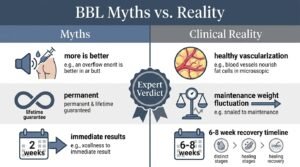
| Myth | Clinical Reality |
| More fat injected = bigger, longer-lasting results | Overfilling causes fat necrosis, oil cysts, and poor contour. Experienced surgeons deliberately under-correct slightly. |
| BBL results are permanent if you maintain your weight | Surviving fat cells behave like all fat, they shrink when you lose weight and expand when you gain. “Permanent” cells ≠ stable aesthetics. |
| A BBL pillow for two weeks is sufficient protection | Current evidence supports 6–8 weeks of modified sitting. The two-week rule is a minimum, not a milestone. |
| Complete rest after surgery is the safest approach | Light walking within days is typically recommended to prevent DVT. Total inactivity is actually higher-risk than gentle movement. |
| High review counts mean a surgeon is safe | Review platforms don’t capture long-term complications or revisions. Many complications emerge after patients return home and are treated elsewhere. |
Myth 1: The More Fat Injected, the Better the Outcome
This is one of the most dangerous misconceptions in patient communities, and it drives a real clinical pattern: patients specifically requesting maximum fat injection volumes, and seeking out surgeons who will accommodate that request.
The problem is physiological. Fat cells require blood supply to survive. The tissue into which they are injected has a finite capacity to support newly transferred cells based on the vascular density of that tissue. When fat is injected beyond that capacity, the excess cells die a process called fat necrosis. Dead fat is either reabsorbed in ways that produce irregular contour, or it calcifies into firm, sometimes palpable nodules within the soft tissue.
Surgeons who prioritize outcomes over patient-requested volume targets deliberately under-fill on first procedures. They know that the fat surviving at six months will look better than a overfilled result at three months that subsequently breaks down unevenly. Patients who pressure surgeons for maximum volume, or who seek out providers known for aggressive injection quantities, are inadvertently working against their own results.
Myth 2: BBL Results Are Permanent
The word “permanent” appears in almost every BBL marketing context, and it is technically defensible, the fat cells that successfully survive the transfer and establish vascularization do become permanent residents of the tissue.
What the word obscures is that these cells behave exactly like every other fat cell in your body. They respond to caloric intake, hormonal changes, and metabolic shifts exactly as they would in their original location. A patient who loses 20 pounds after a BBL will see proportional volume loss in the augmented area. A patient who gains weight may see the augmented area expand more noticeably than surrounding tissue, because there are now more fat cells concentrated in that zone.
“Permanent” is more accurately described as: the cellular change is lasting, but the aesthetic expression of that change is as variable as your body weight and hormonal environment over time.
Myth 3: The Two-Week No-Sitting Rule Fully Protects Your Results
The two-week sitting restriction has become the defining behavioral rule of BBL recovery, communicated by surgeons, repeated by patients in forums, and treated as the primary post-operative requirement.
The clinical reality, based on more recent understanding of fat cell vascularization timelines, is that two weeks is the beginning of the critical protection window, not the end. Neovascularization, the process of new blood vessels growing into the transferred fat tissue, takes four to six weeks to complete. Pressure applied to the buttocks during this window compresses the micro-channels through which new vessels are growing.
The reason the two-week rule became standard is partly practical: full compliance for six to eight weeks is a significant life disruption, and some surgeons felt that a shorter, more achievable restriction was better than a longer one patients would abandon early. But patients who understand the underlying biology and protect their results for the full vascularization window consistently see better fat retention at their six-month follow-up.
Myth 4: Total Rest Is the Safest Recovery Approach
Patients recovering from BBL surgery are appropriately concerned about doing anything that might harm their results, which creates a tendency toward complete inactivity during recovery. Ironically, this has its own clinical risks.
Deep vein thrombosis (DVT), blood clot formation in the deep veins, typically of the legs, is a real post-surgical risk that is significantly elevated by prolonged immobility. Most surgeons recommend light walking within 24 to 48 hours of surgery specifically to maintain circulation and reduce DVT risk. This walking is not a threat to the fat transfer; it does not compress the buttocks.
The restriction on exercise in BBL recovery is specifically about: compression of the gluteal area (sitting, certain yoga or floor positions), high-impact cardiovascular activity that creates mechanical stress on healing tissue, and strength training exercises targeting the glutes. Gentle ambulation is not only permitted in most protocols, it is actively recommended for safety.
Myth 5: A High Volume of Positive Reviews Means a Surgeon Is Safe
Review platforms, Google, RealSelf, Yelp, measure patient satisfaction at the time of review submission, which is typically within the first few weeks to months post-procedure. They are not clinical quality metrics.
BBL complications, fat necrosis, contour irregularities, infection, and in rare cases more serious events, frequently manifest weeks after surgery. Patients who traveled for their procedure, particularly for international surgical tourism, are back home by then. Their complications get treated by physicians elsewhere. The review profile of the original surgeon never reflects these outcomes.
The metrics that actually reflect surgical quality complication rates, revision rates, long-term outcome documentation, and board certification verification are not visible on review platforms. A surgeon with 500 five-star reviews and no board certification from the American Board of Plastic Surgery is not a safer choice than a board-certified surgeon with fewer online reviews. These signals operate in completely different categories and should never be conflated.
BBL Revision Surgery: The Outcome Nobody Prepares You For
A meaningful percentage of patients who undergo BBL surgery will eventually have questions about revision, whether because fat absorption produced less volume than expected, because asymmetries developed during healing, or because contour irregularities emerged over time. Yet revision is one of the least-discussed topics in pre-operative BBL conversations.
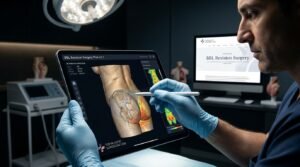
Understanding what revision involves, what is and isn’t correctable, and how to approach it realistically is a critical part of fully informed consent, not a failure scenario to be mentioned only if things go wrong.
The Waiting Problem: Why You Cannot Rush a Revision
The single most important thing to understand about BBL revision is the timeline. Most surgeons will not perform a revision procedure before the 6 to 12-month mark post-operatively, and this is not arbitrary conservatism.
Swelling from fat transfer takes many months to fully resolve. The residual edema in the tissue obscures the actual final volume and contour for far longer than most patients expect. Patients who feel their results look flat or uneven at the three-month mark are frequently evaluating a result that has not finished developing.
Surgeons who perform revisions before the tissue has fully settled often do so on an inaccurate picture of the actual outcome. The result of an early revision can compound the original problem rather than correct it. The 6 to 12-month wait is genuinely necessary, not a delay tactic and it is information that should be communicated before the primary procedure, so that patients enter the recovery period with accurate expectations about the timeline.
What Is Actually Revisable And What Isn’t
Not all BBL concerns have equivalent revision solutions. Understanding the difference helps set realistic expectations and informs better decisions about whether and when to pursue correction.
What revises well: Modest, symmetric volume loss after initial healing is the most straightforward revision scenario. A second fat grafting session assuming sufficient donor fat is available can meaningfully restore volume. Minor asymmetries where one side has retained less fat than the other also respond well to targeted grafting in the deficient area. Subtle contour irregularities at the lateral hip or waist transition zones can typically be refined with precise re-grafting.
What is significantly harder to revise: Contour deformities resulting from fat injected into incorrect anatomical planes are substantially more complex to address. Significant skin laxity that developed around the augmented area, particularly in patients who lost weight after their procedure, requires skin management approaches that fat grafting alone cannot solve. Deep tissue scarring from infection or fat necrosis creates a recipient site that accepts new fat grafts poorly.
Understanding where your concern falls on this spectrum is the starting point for any revision consultation.
Donor Site Availability: The Hidden Constraint on Revision
This is the variable that surprises patients most during revision consultations: the fat that would be used in a second procedure may no longer be there in the same quality or quantity.
The primary BBL typically harvests from the most accessible and highest-quality donor areas the lower abdomen, flanks, and inner thighs. After liposuction, these areas develop scar tissue. The fat that remains is more fibrous, more difficult to extract cleanly, and survives transfer with lower viability than virgin tissue.
Patients who are considering revision need a frank assessment of their remaining donor inventory. In some cases, enough is available for a meaningful second procedure. In others, the donor limitation is the binding constraint on what can be achieved and this should be communicated honestly before the revision is booked, not discovered intraoperatively.
Who Should Perform Your Revision And Why This Matters
Revision surgery is meaningfully more complex than primary BBL surgery. The altered tissue environment characterized by scar tissue, modified vascular patterns, and potentially depleted donor sites, requires surgical experience that specifically includes revision cases, not just high primary procedure volume.
Many patients default to returning to their original surgeon for revision, which is often appropriate if the outcome gap resulted from biological factors rather than technical ones, and if the surgeon-patient relationship is intact. However, in cases where the original result reflects a significant technique problem, or where the patient has concerns about the original surgical decision-making, seeking a second opinion from a surgeon who specifically lists revision BBL in their practice is clinically reasonable and should not feel like an act of disloyalty.
When evaluating a revision surgeon, ask specifically: “What percentage of your BBL cases are revisions versus primary procedures, and what are the most common concerns you address?” A surgeon with meaningful revision experience will be able to answer this concretely.
The Psychological Dimension That Nobody Discusses Pre-Operatively
Research in plastic surgery psychology has consistently identified that post-surgical dissatisfaction particularly in body contouring procedures, is associated with elevated rates of depressive symptoms and, in patients with pre-existing body image concerns, exacerbation of those concerns.
This is not an argument against BBL surgery. It is an argument for thorough pre-operative psychological screening and honest expectation-setting, particularly for patients who report significant emotional distress related to the specific area being addressed, who describe their current appearance in severely negative terms, or who have previously been dissatisfied with cosmetic procedures.
Practices that include psychological readiness as a formal part of their pre-operative process, and that offer structured support for the emotionally difficult three-to-six-month waiting period when results are still developing, have measurably better patient satisfaction outcomes independent of the final aesthetic result. If a practice’s pre-operative process includes no discussion of emotional preparation and recovery expectations, that is worth noting.
Overview
BBL means A Brazilian Butt Lift (BBL) is a cosmetic procedure that:
- Removes fat from areas such as the abdomen, thighs, or flanks using liposuction.
- Purifies the collected fat.
- Injects the fat into the buttocks to improve shape, volume, and contour.
In conclusion, the Brazilian Butt Lift offers a natural and effective way to enhance your buttocks and overall body proportions. With its ability to deliver natural-looking results, improve body contours, and boost self-confidence, it’s no surprise that it has gained popularity in the world of cosmetic surgery. However, it’s crucial to understand the procedure, select a qualified surgeon, and follow post-operative care instructions to achieve the best outcomes. Remember, the journey to a more confident you starts with being well-informed. So, let this be your first step towards your transformation.
Frequently Asked Questions
How long do Brazilian bum lifts last?
Brazilian bum lifts can last several years, even over a decade, but maintaining a consistent weight is important for preserving the results. Your body changes as you age, which can also affect the longevity of the results.
How much is a Brazilian butt lift?
The average cost of a Brazilian butt lift is $6,083, according to the latest statistics from the American Society of Plastic Surgeons.
How is the fat grafting process in a BBL performed?
In a BBL, the fat grafting process begins with liposuction to remove excess fat, followed by purifying the harvested fat and injecting it into the buttocks to achieve the desired volume and contour.
How does the recovery process look like after a BBL?
After a BBL, the recovery process includes about five days of rest, with bruising, swelling, and some pain. Wearing compression garments for at least one month is recommended.
Refrences
- ASPS urgent warning on BBL risks — American Society of Plastic Surgeons
- Improving BBL safety: latest techniques and protocols — ASPS
- BBL safety and the Multi-Society Task Force guidelines — PubMed Central
- Verify board certification — American Board of Plastic Surgery
- 2023 plastic surgery statistics report — ASPS