


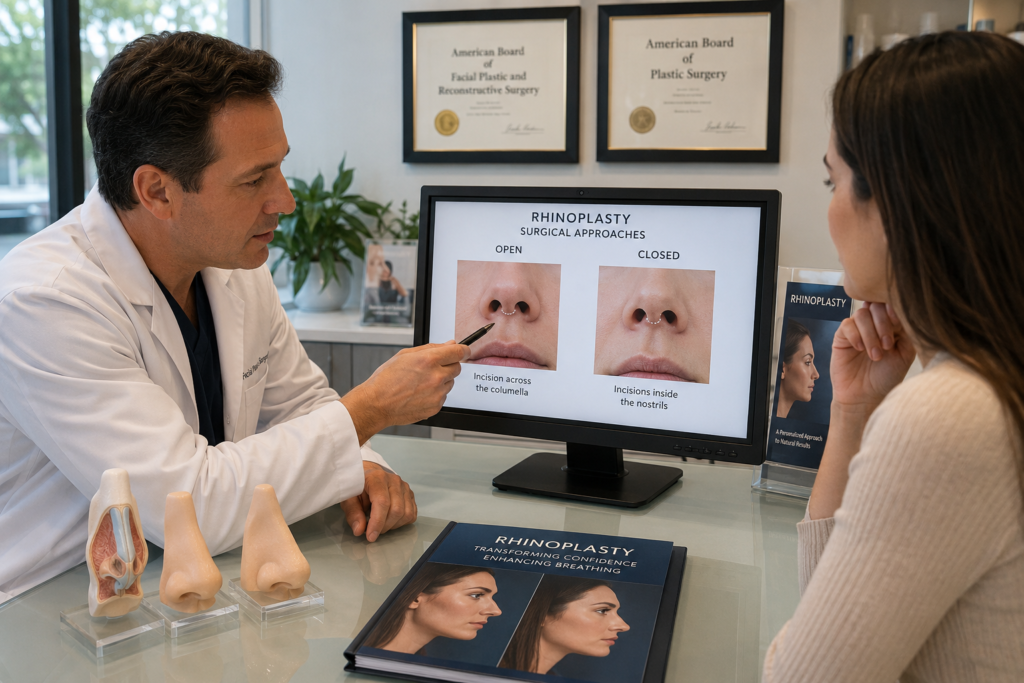
Rhinoplasty is defined as a surgical procedure that reshapes or reconstructs the nose to improve its appearance, restore breathing function, or both. Commonly called a “nose job,” it is one of the most frequently performed plastic surgeries in the United States, with over 350,000 procedures completed in 2024 alone, according to the American Society of Plastic Surgeons (ASPS). Patients seek rhinoplasty for a wide range of reasons, from reducing a dorsal hump or refining a bulbous tip to repairing a post-injury deformity or correcting a deviated septum that causes chronic breathing difficulty. This 2026 guide walks you through everything you need to know, from how the surgery actually works to realistic cost expectations and what recovery looks like week by week, so you can make a genuinely informed decision.
What Exactly Happens During a Rhinoplasty Procedure?
A rhinoplasty procedure involves a board certified plastic surgeon making precise modifications to the bone, cartilage, and soft tissue of the nose to achieve the desired shape or improved function. There are two primary surgical approaches used in the United States today.
Open vs. Closed Rhinoplasty: Which Technique Is Right for You?
Open rhinoplasty involves a small incision made across the columella, which is the narrow strip of tissue between the nostrils. This approach gives the surgeon full visibility and access to the internal nasal structures, making it the preferred choice for complex reshaping, tip refinement, and revision cases.
Closed rhinoplasty places all incisions inside the nostrils, leaving no visible external scarring. Recovery tends to be slightly shorter, and swelling is often reduced compared to open techniques. It works best for patients who need modest changes rather than significant structural work.
During either approach, the surgeon follows a clear sequence of steps:
- Anesthesia is administered, typically general anesthesia or intravenous sedation.
- Incisions are made according to the chosen technique.
- The skin is carefully lifted away from the underlying bone and cartilage framework.
- The surgeon reshapes, removes, or adds tissue as planned before surgery.
- If cartilage grafts are needed, donor tissue is usually taken from the ear or rib.
- The skin is re-draped over the new framework and incisions are closed.
- Splints or soft packing may be placed to support the nose during early healing.
The full procedure generally takes between one and a half to three hours depending on the complexity of the case.
Functional Rhinoplasty: When the Goal Is Better Breathing
Not every rhinoplasty is cosmetic. Functional rhinoplasty is performed to correct structural problems that interfere with normal nasal airflow. The most common of these is a deviated septum, where the wall dividing the two nasal passages shifts to one side. Turbinate reduction, correction of nasal valve collapse, and repair of trauma-related deformities all fall under functional rhinoplasty. In many cases, patients pursue both cosmetic and functional goals in a single combined procedure, which can reduce overall recovery time and cost.
According to the American Board of Facial Plastic and Reconstructive Surgery (ABFPRS), functional rhinoplasty is often partially or fully covered by health insurance when a documented breathing impairment exists.
How Much Does Rhinoplasty Cost in the United States in 2026?
Rhinoplasty cost in the United States varies significantly based on geographic location, surgeon experience, facility fees, and the complexity of the procedure. Below is a general cost breakdown based on current 2026 averages from ASPS data and reported surgical center pricing.
| Cost Component | Average Range (USD) |
| Surgeon fee | $5,000 to $12,000 |
| Anesthesia fee | $1,000 to $1,800 |
| Facility or hospital fee | $700 to $1,500 |
| Pre-op medical tests | $150 to $400 |
| Post-op medications and splints | $100 to $300 |
| Revision rhinoplasty (if needed) | $7,000 to $15,000 |
| Total estimated cost (cosmetic) | $7,000 to $16,000 |
Health insurance typically does not cover cosmetic rhinoplasty. However, if you have documented difficulty breathing and a surgeon confirms a structural cause, your insurer may cover the functional portion of the procedure. Always request a pre-authorization letter before scheduling surgery.
Many accredited plastic surgery practices across the United States offer patient financing through third-party providers such as CareCredit or Alphaeon Credit, making rhinoplasty more accessible without paying the full amount upfront.
What Affects the Final Price the Most?
Surgeon experience and reputation account for the largest portion of cost variation. A double board certified facial plastic surgeon or a plastic surgeon with rhinoplasty as a subspecialty focus will typically charge more than a general practitioner offering the procedure. That said, choosing a highly qualified surgeon with a strong rhinoplasty portfolio dramatically reduces the risk of complications and the need for costly revision surgery down the line.
Geographic location matters significantly as well. Practices in New York City, Los Angeles, Miami, and Beverly Hills tend to run 20 to 40 percent higher than the national average. Practices in the Midwest and South often offer the same quality of care at lower total costs. It is also worth noting that facility type plays a role: a surgery center accredited by the American Association for Accreditation of Ambulatory Surgery Facilities (AAAASF) may have different overhead than a hospital-based operating room, and that difference is reflected in facility fees.
One important piece of financial planning that many patients overlook is scheduling a consultation before budgeting. During your consultation, your surgeon will outline exactly which components apply to your case. Some patients only need minor tip work, while others require more extensive bone reshaping and cartilage grafting, and those differences drive meaningful cost variation even with the same surgeon.
Rhinoplasty Recovery: What to Expect Week by Week
Recovery from rhinoplasty follows a predictable timeline for recovery, though individual healing varies. Here is what most patients in the United States experience post-procedure.
Week by Week Recovery Timeline After Rhinoplasty
Week 1: Swelling, bruising around the eyes, and nasal congestion are at their peak. A nasal splint is worn during this phase. Most patients manage discomfort with prescribed pain medication. You should rest at home and keep your head elevated.
Weeks 2 to 3: The external splint is removed, usually around day seven to ten. Bruising fades noticeably. About 60 percent of the visible swelling resolves during this window. Many patients feel comfortable returning to desk work and light activity.
Weeks 4 to 6: You can resume low impact exercise. The nose still feels slightly stiff and numb, which is normal. Sun exposure should be avoided to prevent pigmentation changes to healing skin.
Months 3 to 6: Residual swelling in the tip of the nose continues to resolve. Most patients see close to their final result by month six, though full settlement takes longer.
Month 12 and beyond: Final rhinoplasty results are typically fully visible at the one-year mark. Subtle changes in contour continue even after this point as scar tissue matures.
The ASPS advises patients to avoid contact sports and any activity that risks impact to the nose for a minimum of six weeks after surgery. Sleeping on your back with your head elevated on two pillows is strongly recommended for the first three to four weeks. This simple habit reduces fluid pooling around the nose and helps swelling resolve more evenly. Blowing your nose should be avoided entirely during the first two weeks, as internal pressure can disrupt early healing. If you wear glasses, your surgeon will advise you on an alternative method of supporting them away from the nasal bridge during the early recovery months.
Frequently Asked Questions(FAQs)
What is the right age to get rhinoplasty in the United States?
Most surgeons recommend waiting until nasal growth is complete before undergoing rhinoplasty. For girls, this is generally around age 15 to 16. For boys, it is closer to 17 to 18. Adults of any age may be candidates as long as they are in good general health and have realistic expectations.
Is rhinoplasty painful?
The procedure itself is performed under anesthesia, so you feel nothing during surgery. Post-operative discomfort is typically described as pressure and congestion rather than sharp pain. Most patients manage well with over-the-counter medications after the first few days, though your surgeon will provide a prescription pain management plan for the initial recovery period.
How long do rhinoplasty results last?
Rhinoplasty results are considered permanent for the structural changes made to bone and cartilage. However, the nose continues to age along with the rest of the face over the decades following surgery. Natural aging processes such as skin laxity and subtle cartilage changes may gradually affect appearance, though the core improvements from your surgery remain intact.
What is the difference between rhinoplasty and septoplasty?
Rhinoplasty focuses on the external shape of the nose and may include internal structural work. Septoplasty is specifically defined as surgery to correct a deviated nasal septum and is performed entirely for functional improvement. The two procedures are frequently combined into what surgeons call a septorhinoplasty.
Can rhinoplasty fix breathing problems caused by allergies?
Rhinoplasty and septoplasty correct structural obstructions such as a deviated septum, enlarged turbinates, or nasal valve collapse. They do not treat the underlying inflammatory response caused by allergies. If your breathing problems are allergy-related rather than structural, your surgeon may recommend medical management first or in combination with surgery.
How do I find a qualified rhinoplasty surgeon in the United States?
Look for surgeons who are board certified by the American Board of Plastic Surgery (ABPS) or the American Board of Facial Plastic and Reconstructive Surgery (ABFPRS). Review before and after portfolios that specifically show rhinoplasty cases similar to your own anatomy and goals. Always schedule at least one formal consultation before making a decision.
What is a non-surgical rhinoplasty and how is it different?
Non-surgical rhinoplasty uses injectable dermal fillers, typically hyaluronic acid based, to temporarily alter the shape of the nose without incisions or anesthesia. It can smooth bumps, improve symmetry, and lift the tip. Results last six to eighteen months. It is not a substitute for surgical rhinoplasty when structural correction or significant reshaping is needed.
Is Rhinoplasty Right for You? Key Takeaways
Rhinoplasty is a highly individualized procedure, and the best outcomes come from careful planning between a patient and a qualified, experienced surgeon. Before committing to surgery, consider these points:
- Confirm you have realistic expectations and understand that full results take up to one year to appear.
- Choose a surgeon who is board certified with a verified rhinoplasty specialty portfolio.
- Understand whether your procedure qualifies as functional and may be covered by insurance.
- Budget for the complete cost, including anesthesia, facility fees, post-op care, and potential revision.
- Follow all pre and post-operative instructions closely to support healing and protect your results.
If you are ready to explore your options, the board certified plastic surgeons listed on top-plasticsurgeons-usa.com serve patients across every major metropolitan area in the United States. Each surgeon has been vetted for credentials, patient outcomes, and surgical specialization to help you find the right fit for your goals.