


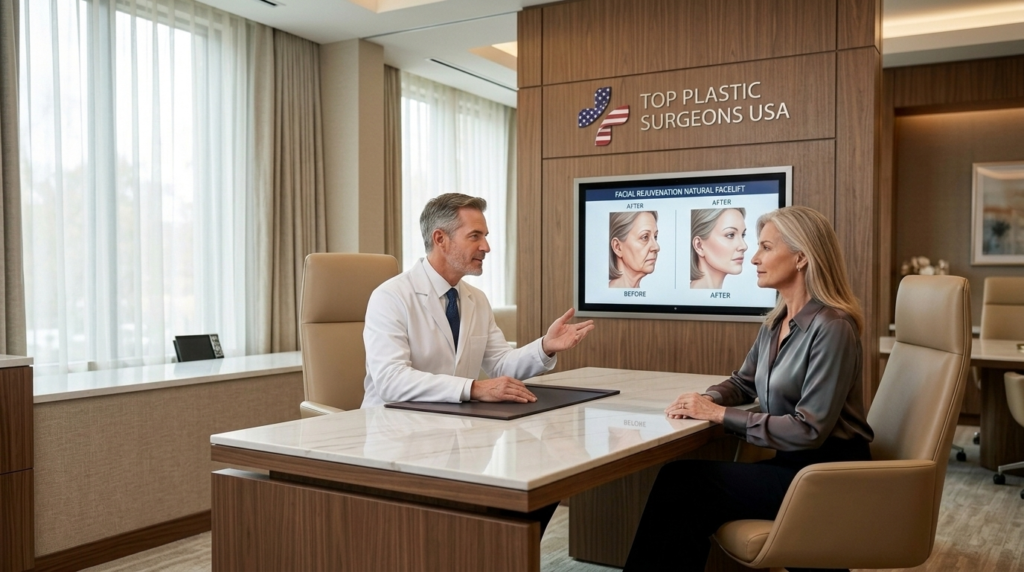
Every morning, millions of people look in the mirror and notice something they did not expect. Their jawline looks softer. The skin around their neck feels looser. Their face looks tired, even on days when they feel perfectly fine. If this sounds like you, do not worry. You are not alone. This happens to a lot of people, and there is something that can help.
Facelift surgery is one of the most popular cosmetic procedures in the world. The American Society of Plastic Surgeons says it is in the top five surgeries performed every single year, and in 2026, more people are looking into it than ever before. This guide will walk you through everything you need to know in simple, easy language. No big medical words. No pressure. Just honest, straight-forward information to help you make the best choice for yourself.
What Exactly Is a Facelift?
It is a surgery that helps your face look younger. A trained surgeon gently lifts and tightens the skin, muscles, and tissue in your face and neck. This smooths out wrinkles, firms up your jawline, and removes loose, sagging skin.
The result is simple. You look refreshed and younger. Not fake. Not frozen. Just naturally better. A facelift does not change who you are. It just helps your face match how you feel on the inside.
One important thing to know. The best results from this procedure are ones where nothing looks obvious. People around you should simply think you look great. They should not be able to tell you had any work done at all.
The 4 Main Types of Facelift Surgery in 2026
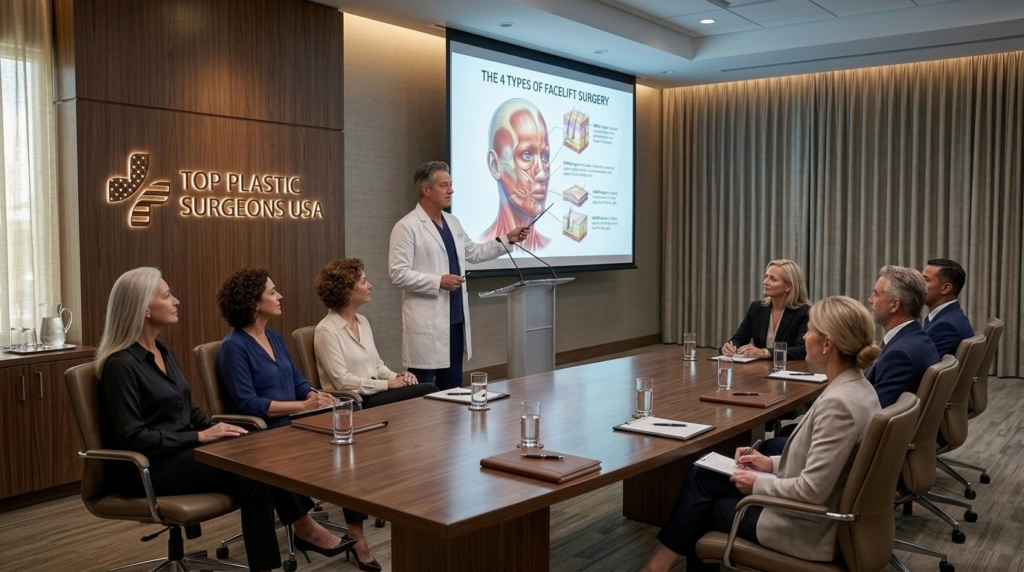
Not every facelift is the same. The right one for you depends on your age, your skin, and what changes you want to see. Here are the four main facelift techniques available in 2026.
1. Mini Facelift Light, Quick, and Natural
A mini facelift is the gentlest option. It uses small cuts near the ears to lift and tighten the lower face and jaw line. Because it is less involved than a full facelift, recovery is faster and the cost is lower.
This is the facelift that younger patients especially women in their 40s are choosing as a preventative step. The goal is to address early signs of aging before they become harder to fix.
Best for: Early sagging around the jaw and cheeks. Women in their 40s to early 50s. Recovery: 1 to 2 weeks. Lasts: 5 to 7 years.
2. Full Facelift : The Classic & Comprehensive Option
It addresses the entire face: cheeks, jaw line, and often the neck. Your surgeon tightens the muscles, repositions the skin, and removes loose tissue to restore a smooth, youthful facial contour.
This remains the most commonly performed facelift surgery in the US. It is ideal for patients who have moderate to significant sagging and want a dramatic but natural-looking improvement.
Best for: Moderate sagging and deeper wrinkles. Women in their 50s to early 60s. Recovery: 2 to 4 weeks. Lasts: 7 to 10 years.
3. SMAS Facelift: Deeper Lift, More Natural Results
The SMAS facelift goes one layer deeper than a standard facelift. Your surgeon lifts a layer of tissue beneath the skin called the SMAS, which connects to your facial muscles. Because this technique works at a deeper level, the results look more natural and tend to last longer.
Many board-certified plastic surgeons prefer this technique for patients who want results that truly stand the test of time.
Best for: Patients who want long-lasting, natural-looking results. Ages 45 to 65. Recovery: 2 to 4 weeks. Lasts: 10 to 15 years.
4. Deep Plane Facelift: The Gold Standard in 2026
The deep plane surgery is the most advanced option available today. It goes deeper than any other technique. Instead of just pulling the skin tight, it actually moves the deeper layers of your face including the ligaments and fat that cause the heaviest signs of aging. This includes deep lines around the mouth, heavy jowls, and loose skin on the neck.
Because it works with your natural face rather than just stretching the skin, the results look completely natural. Nobody will be able to tell you had anything done. And out of all the options available, this one lasts the longest.
In 2026 this is considered the best of the best in facial surgery. More and more people are choosing this option at top clinics across cities like Newport Beach, Beverly Hills, Austin, and Philadelphia.
Best for: Significant sagging, deep folds, heavy jowls, neck laxity. Ages 50 to 70+. Recovery: 3 to 5 weeks. Lasts: 15 years or more
| Type | Best For | Recovery | Longevity |
| Mini Facelift | Early aging, 40s–50s | 1–2 weeks | 5–7 years |
| Full Facelift | Moderate sagging, 50s–60s | 2–4 weeks | 7–10 years |
| SMAS Facelift | Natural results, 45–65 | 2–4 weeks | 10–15 years |
| Deep Plane | Significant sagging, 50–70+ | 3–5 weeks | 15+ years |
What Is the Right Age for a Facelift? The Question Everyone Is Asking in 2026
There is no perfect age to have this surgery done. It all depends on you. Your skin, your face, and what you want to achieve. But here is a simple breakdown by age to help you understand.
In Your 40s : This is the best time to get ahead of aging before it gets worse. Many women choose a smaller, lighter procedure in their 40s because there is not much to fix yet. The results look very natural. Think of it as taking care of your face early instead of waiting too long.
In Your 50s : This is the most common age for this type of surgery. By this point the jawline starts to soften, the neck gets looser, and the face loses some of its shape. A surgery done in your 50s can make a huge difference. Most women who do it in their 50s say they wish they had done it sooner.
In Your 60s and 70s : Age is not a problem. Some of the most amazing results come from women in this age group. The right surgery can take 15 years off your face in just one procedure. What matters most is that you are healthy enough for surgery. Your age on paper does not matter.
The Simple Truth
The best time to do this is when the changes in your face start to bother you and you are healthy enough to go through with it safely. That is really all there is to it.
What Nobody Tells You Before a Facelift : 5 Honest Truths
1. The best facelift is invisible
Nobody should look at you and think she had surgery. Modern facelift techniques especially the deep plane approach are designed to restore natural facial movement and contours. You should simply look refreshed and well-rested.
2. Your surgeon matters more than the technique
Any facelift technique is only as good as the surgeon performing it. Always choose a board-certified plastic surgeon certified by the American Board of Plastic Surgery. Read reviews look at established practices like Naficy Plastic Surgery & Rejuvenation Center and TriHealth Cosmetic Surgery & Rejuvenation Center to understand what a high standard of care looks like.
3. Final results take time
Most patients look presentable within three to four weeks. But the final, fully settled result takes six to twelve months. Swelling fades slowly. Patience is part of the process and the results are worth the wait.
4. Chewing gum after surgery is a real topic
Many patients ask about the chewing gum effects after facelift surgery. Light chewing can gently stimulate circulation during early recovery. But chewing too vigorously too soon can strain healing tissue. Always ask your surgeon specifically when it is safe to resume every patient’s healing timeline is different.
5. Sun protection is not optional
UV exposure after facelift surgery can cause dark spots, slow healing, and compromise your results. SPF 50+ every day starting from day one of recovery is non-negotiable. The best facial rejuvenation products to use post-surgery are ones your surgeon specifically recommends.
Facelift Recovery – Week by Week
| Timeline | What to Expect |
| Days 1–3 | Swelling, bruising, tightness. Rest with head elevated. |
| Days 4–7 | Pain eases. Drains removed if used. |
| Week 2 | Bruising fades. Comfortable at home. |
| Weeks 3–4 | Most return to light activity and desk work. |
| Months 2–3 | Swelling mostly gone. Results becoming visible. |
| Month 6–12 | Final results clear. Scars nearly invisible. |
Recovery tips that actually help:
- Sleep with two pillows under your head for the first two to three weeks
- No strenuous exercise or heavy lifting for at least six weeks
- Avoid hair coloring for six weeks after surgery
- Wear SPF 50+ sunscreen every single day
- Follow your surgeon’s skincare guidance closely ‘what you put on your face matters’
Non-Surgical Options: Not Ready for Surgery Yet?
That is completely okay. There are excellent non-surgical and minimally invasive treatments that can refresh your appearance without any downtime.
Liquid Facelift : Popular in Beverly Hills and nationwide, this uses dermal fillers and Botox to add volume, contour the jaw line, and soften lines. No surgery, no recovery. Results last one to two years. It is a great starting point, but it cannot replicate the longevity of a real facelift.
Laser Facial Rejuvenation : Improves skin quality, reduces sun damage, and smooths texture. Works beautifully as a complement to surgical facial rejuvenation in 2026.
IPL Machine Facial Rejuvenation (Professional) : Reduces redness, pigmentation, and early signs of aging. Very popular for patients who want a refresh without any downtime.
Eyelid Rejuvenation Without Surgery : Energy-based treatments that firm the delicate skin around the eyes. A great companion to facelift surgery or as a standalone treatment.
Fat Grafting : Uses your own fat to restore volume loss in the face. Increasingly combined with deep plane facelifts for comprehensive, natural results.
Neck Lift : Often performed alongside a facelift to address laxity and banding in the neck and under the chin. Many patients find this adds tremendous value to their overall result.
How to Find the Right Facelift Surgeon Near You
This is the most important decision you will make in this entire process. Here is what to look for:
Check credentials first: Only see a board-certified plastic surgeon. Look for certification from the American Board of Plastic Surgery or the American Board of Facial Plastic and Reconstructive Surgery.
Study before-and-after photos: Look for natural-looking results, not tight, windswept, or artificial. Find patients whose age and concerns match yours.
Book more than one consultation: See two or three surgeons before you decide. A good surgeon will always encourage this. They will never pressure you to book on the spot.
Ask the right questions: In your consultation, ask which facelift technique suits your facial anatomy, how many procedures the surgeon performs each year, and what realistic expectations look like for someone in your situation.
Trust your instincts: The right surgeon listens carefully, communicates clearly, and puts your goals first. If something feels rushed or off, see someone else.
Facelift surgeons and facial plastic surgery practices can be found in every major US city — from Newport Beach and Beverly Hills to Austin, Boca Raton, Main Line Philadelphia, and Wilmington MA.
Frequently Asked Questions
What is the difference between a Deep Plane and a SMAS facelift?
Both are popular surgical techniques but they work at different layers of the face. A SMAS facelift targets the muscle layer just beneath the skin. A deep plane goes even deeper and repositions the ligaments and fat. This is why deep plane results look more natural and last significantly longer.
Why is fat grafting now included in most modern procedures?
As we age we do not just lose skin tightness we also lose facial volume. Fat grafting takes fat from another part of your body and adds it back to areas of your face that look hollow or sunken. This gives a fuller and more youthful result that no amount of skin tightening alone can achieve.
Is a liquid facelift as effective as a surgical one?
A liquid facelift uses fillers and injections to temporarily improve the look of your face. It is a good option for people not ready for surgery. However the results do not last nearly as long and it cannot fix significant sagging the way surgery can.
How is regenerative medicine changing recovery in 2026?
New recovery tools like PRP therapy and exosomes are helping patients heal faster and with less swelling. These treatments use your body’s own healing abilities to speed up the process and improve your final results.
When should I stop getting fillers and consider surgery instead?
If you find yourself needing more and more filler to get the same result it may be time to think about surgery. This is sometimes called filler fatigue. A proper surgical procedure can deliver results that fillers simply cannot match at that stage.
What are the hidden fees in a facelift quote?
The price you first see may not be the full picture. Always ask if the quote includes anesthesia fees, facility fees, follow up appointments, and post surgery skin care. Getting a clear breakdown upfront helps you avoid any surprises later.
Final Thoughts
Facelift surgery in 2026 is safer, more refined, and more natural-looking than it has ever been. Whether you are exploring a gentle mini facelift in your 40s or a life-changing deep plane facelift in your 60s, the right procedure performed by the right board-certified surgeon can give you results that last 10 to 15 years and look completely natural.
You do not have to look tired. You do not have to feel like the outside does not match the inside.
Schedule a consultation. Ask your questions. Look at the before-and-after photos. And when you find the right surgeon take the step.