


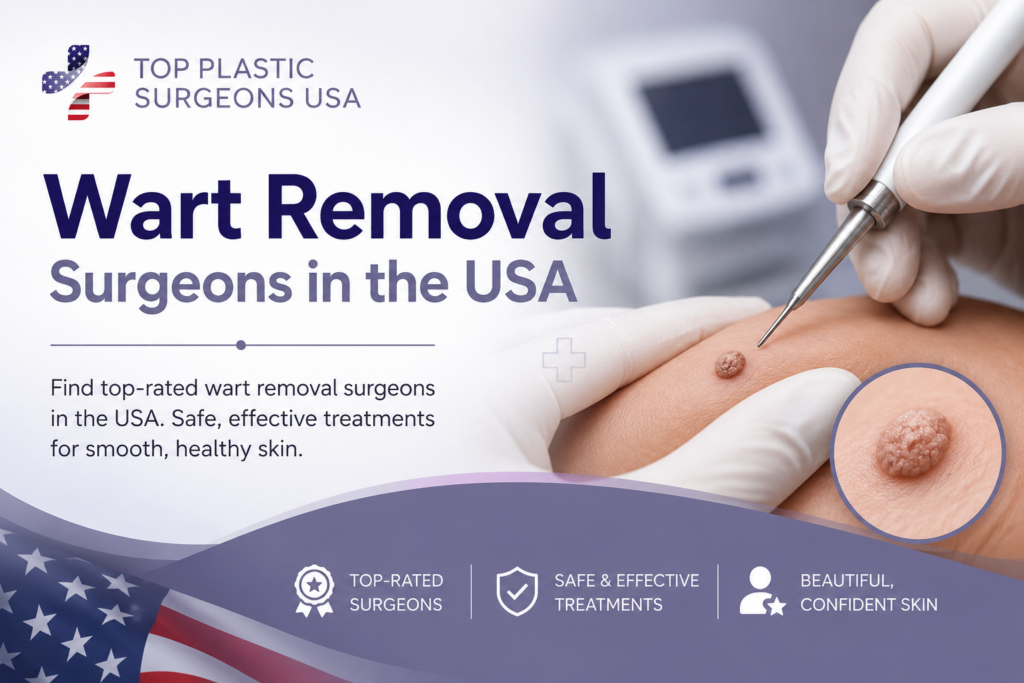
Warts are harmless in almost every case. That doesn’t make them any less irritating to look at, especially if you’ve already tried freezing one off twice with a drugstore kit and it’s still sitting there like nothing happened. At some point, a spray can stop being the answer, and a medical professional becomes the better move.
Below is a breakdown of who actually treats warts, what wart removal involves, what it tends to cost, and how to think about choosing the right specialist.
What Kind of Doctor Specializes in Surgical Wart Removal?
The right doctor has less to do with the wart itself and more to do with where it sits and how long it’s resisted treatment.
Dermatologists
Dermatologists see the majority of wart cases, whether the wart shows up on a hand, a knee, or the face. Their options go well beyond anything sold over the counter cryotherapy, curettage, and prescription-strength treatments that require a script.
Podiatrists
Warts on the feet go to podiatrists. Plantar warts form on skin that absorbs your full body weight with every step, which pushes them inward rather than letting them sit on the surface. That’s part of why they tend to hurt more than warts elsewhere, and why foot specialists end up treating far more of them than a general dermatology office does.
General or Outpatient Surgeons
Warts that are unusually large, deep, or oddly shaped sometimes call for surgical excision. A dermatologist will typically hand these cases off to a general or outpatient surgeon, particularly when a biopsy needs to confirm what’s actually growing there.
Meet Board-Certified Surgeons in Our Network
Wart removal itself is dermatology or podiatry territory, not plastic surgery, so none of the surgeons below are the ones freezing off a wart. But skin concerns don’t always stay in one lane. A wart visit sometimes opens up a bigger conversation about scarring, skin texture, or cosmetic follow-up care, and that’s where a board-certified plastic surgeon becomes relevant.

Dr. Alan Durkin, MD founded Ocean Drive Plastic Surgery in Vero Beach, FL, building a practice known for ethical, patient-first care. He’s double board-certified in plastic and reconstructive surgery and general surgery, teaches at both Florida State University and Nova Southeastern University, and has published more than 25 peer-reviewed papers covering facial rejuvenation, breast surgery, and body contouring. His office runs an on-site medical spa and laser facility, which comes in handy for patients managing skin texture or scarring after any prior procedure.

Dr. Stelios Wilson, MD practices in New York City and trained at Manhattan Eye, Ear & Throat Hospital, one of the more selective aesthetic surgery fellowships around. He’s board-certified by the American Board of Plastic Surgery, holds a faculty title as Clinical Assistant Professor at Northwell Health, and has authored over 50 peer-reviewed publications. His practice covers facial, breast, body, and reconstructive surgery, with a reputation for balancing technical precision with results that still look natural.
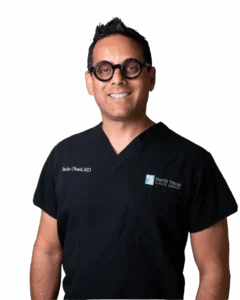
Dr. Sacha Obaid, MD founded North Texas Plastic Surgery and has practiced for more than 15 years across the Dallas-Fort Worth area. His training includes Harvard, a plastic surgery residency at UT Southwestern Medical Center, and a craniofacial surgery fellowship at NYU. Double board-certified, he handles both cosmetic and reconstructive work, making him a strong referral option for anything beyond routine skin care.

Dr. M. Bradley Calobrace, MD, FACS ranks among the more recognized names in breast surgery nationally. He founded CaloAesthetics Plastic Surgery Center and CaloSpa Rejuvenation Centers, serving patients across Kentucky and Indiana, and performs over 1,000 breast, body, and facial procedures a year. He earned his MD from Indiana University School of Medicine, completed general and plastic surgery residencies at USC, and trained under Dr. G. Patrick Maxwell in advanced aesthetic and breast surgery. He’s certified by the American Board of Plastic Surgery and holds faculty appointments at both the University of Louisville and the University of Kentucky.

Dr. Chad Robbins, MD, FACS trained at the Mayo Clinic and now practices in Nashville, TN, where Nashville Scene named him “Best of Nashville.” Board-certified in plastic and reconstructive surgery, his practice centers on facial aging, breast enhancement, body contouring, and mommy makeovers. He publishes research regularly and holds membership with both ASPS and The Aesthetic Society, with an approach built around individualized planning rather than a one-size-fits-all outcome.
Is Surgical Wart Removal Better Than Over-the-Counter Treatments?
For a small wart that hasn’t been around long, salicylic acid from a pharmacy is a reasonable place to start. Most dermatology guidance agrees on that. Give it a few weeks to a couple of months. If it hasn’t budged, a specialist has stronger tools available.
Does Surgical Wart Removal Hurt?
There’s usually some discomfort involved. Cryotherapy causes a brief sting and burn, and other methods can leave the treated area sore for a day or two. Anything beyond a simple freeze typically comes with a numbing agent first, so “surgical” doesn’t automatically translate to painful.
When Does a Wart Become a Medical Emergency?
Almost never but it’s worth getting checked quickly if a wart bleeds without an obvious cause, changes shape or color fast, grows unusually large, or appears near the eyes, mouth, or genitals. Not an emergency in most of these situations, but not something to sit on either.
What Are the Different Surgical Methods for Removing Warts?
No single method clears every wart. What works best depends on size, location, and how stubborn the growth has been.
Curettage and Electrodesiccation
The doctor scrapes the wart tissue away, then applies a mild electrical current to destroy whatever infected cells remain. It’s a common next step once freezing alone hasn’t done the job.
Is Professional Cryosurgery More Effective?
In-office cryotherapy uses liquid nitrogen at a temperature no at-home spray can match. Research in American Family Physicians puts the clearance rate at roughly 50 to 70 percent after three or four sessions, which is a meaningfully better outcome than most people get from a drugstore kit alone.
Is Laser Wart Removal Better Than Cutting It Out?
Laser treatment targets the blood vessels feeding the wart, which can help once other approaches have already failed. It costs more than cryotherapy and isn’t usually the first option offered, but it holds up well for resistant cases.
Surgical Excision
This is reserved for warts that are large, deep-rooted, or unusual in appearance. It’s a bigger step than freezing or scraping, so doctors tend to save it for cases where nothing else worked or a biopsy is needed to rule something else out.
How Much Does Surgical Wart Removal Cost in the USA?
Pricing varies quite a bit depending on the method, how many warts are being treated, and where you live. Rough current ranges look like this:
- Cryotherapy: about $100–$450 per session, often across 1 to 4 sessions
- Laser therapy: about $300–$600 per treatment
- Surgical excision: cost varies by complexity and whether a biopsy is included
How Much Does It Cost to Have a Wart Surgically Removed by a Podiatrist?
Podiatry visits for plantar warts typically fall between $100 and $600 per session, depending on the method used and how many warts are involved.
Does Health Insurance Cover Surgical Wart Removal?
Sometimes. Coverage generally comes down to medical necessity. If a wart is painful, spreading, or affecting how you walk, insurers are more likely to help cover it. Purely cosmetic removal is a harder sell. It’s worth a call to your insurer before scheduling anything.
Why Is My Wart Removal Bill So High?
Multiple sessions add up quickly, and biopsy fees or separate office-visit charges often don’t get mentioned until the bill arrives. Ask for a full cost breakdown before treatment starts so nothing catches you off guard.
What Is the Recovery Time for Surgical Wart Removal?
Recovery depends heavily on the method used, but most in-office procedures mean a few days of mild soreness rather than any real downtime.
How Long Is Recovery After Foot Wart Surgery?
Recovery on the feet tends to run longer than removal elsewhere, mainly because feet carry weight all day, every day. Most people are back to their normal routine within a few days to two weeks, depending on the treatment used and the size of the wart.
Will I Have a Scar After Surgical Wart Removal?
It’s possible, especially with excision. Most in-office methods, cryotherapy included, leave little to no visible scarring when performed correctly. For anyone dealing with more noticeable scarring after a procedure, this guide to treating tummy tuck scars covers scar-fading options that apply to skin healing more broadly, not just abdominal surgery.
Aftercare Tips
Keep the area clean and dry. Leave any scab or blister alone rather than picking at it. Follow your provider’s instructions on bandaging and activity. This matters even more for foot warts, since standing pressure can slow healing down considerably.
What Is the Success Rate of Surgical Wart Removal?
No treatment comes with a guarantee that a wart won’t return, which is why doctors often combine methods for cases that keep resisting treatment.
FAQ Section
When does a wart become a medical emergency?
Rarely but get it checked promptly if it bleeds without cause, changes rapidly, or shows up near the eyes, mouth, or genitals.
Is surgical wart removal better than over-the-counter treatments?
For small, new warts, OTC salicylic acid is a fair first step. Stubborn or painful ones tend to respond faster to in-office care.
Does surgical wart removal hurt?
Most methods bring mild, temporary discomfort. Numbing is standard for anything beyond a quick freeze.
Does health insurance cover surgical wart removal?
Sometimes mainly when it’s medically necessary rather than cosmetic. Check with your insurer first.
How much does it cost to have a wart surgically removed by a podiatrist?
Typically $100 to $600 per session, depending on the method and number of warts.
Why is my wart removal bill so high?
Multiple sessions, biopsy fees, and separate office-visit charges all add to the total.
Is laser wart removal better than cutting it out?
It can help with resistant warts, but it’s usually the second option, not the first.
Conclusion
Most warts are harmless, but that doesn’t mean you have to live with one indefinitely. If over-the-counter treatment hasn’t worked after a couple of months, a board-certified dermatologist or podiatrist can offer something faster and more reliable, and rule out anything that actually needs attention. Ready to find the right specialist? Search our directory of board-certified providers and compare your options in a few clicks.