


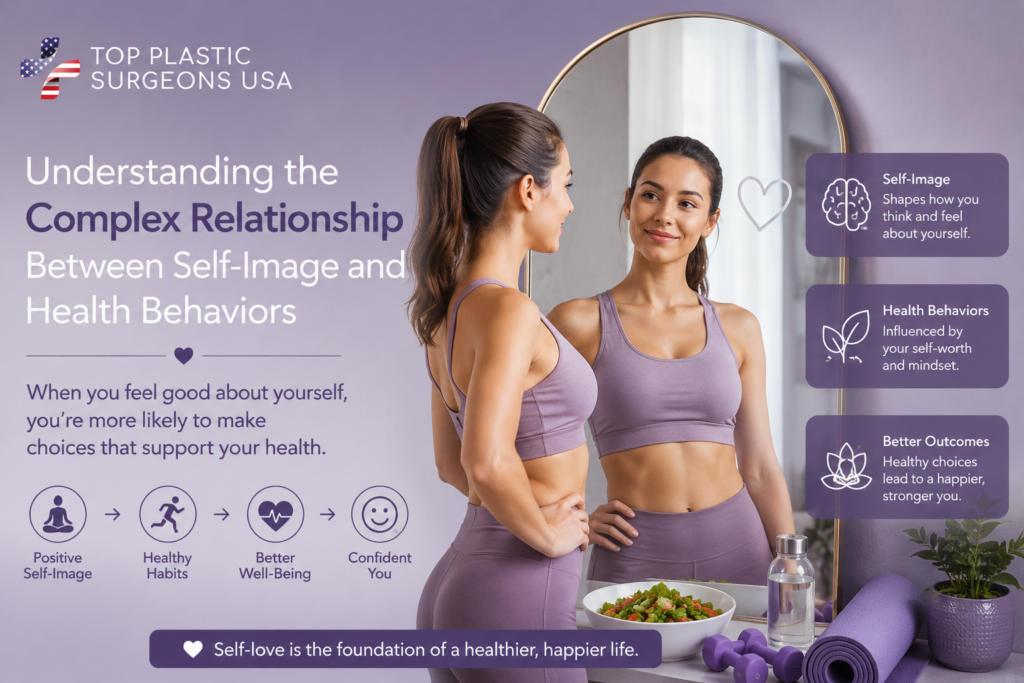
What do you actually see when you look in the mirror? For most people, that reflection sets off a mix of reactions: relief on a good day, disappointment on a bad one, sometimes something closer to dread. Body image shapes more than how you feel about photos. It shows up in how confident you are walking into a room, whether you go for a promotion, and how you cope when the day gets hard.
That last part matters more than people realize. Body dissatisfaction doesn’t just sit quietly in the background; it’s linked to real, measurable increases in mental health struggles and in the kind of coping habits that don’t actually help, including substance use. For those already struggling with this pattern, exploring addiction recovery options early can make a meaningful difference before the habit becomes harder to untangle. This connection comes up constantly in conversations around cosmetic surgery, since a lot of people walk into a consultation hoping a procedure will fix something that surgery was never built to fix. Plastic surgery can absolutely help but only if you understand what it can and can’t do for you first.
The Psychology Behind Body Image Dissatisfaction
Nobody arrives at body dissatisfaction on their own. It gets built over years, starting in childhood, through a steady stream of messages about what a body is supposed to look like. Social media didn’t invent that pressure, but it turned the volume way up. Filtered photos, curated angles, and edited proportions have become the baseline people measure themselves against, even when they know, logically, that none of it is real. People who spend more time on image-heavy platforms consistently report feeling worse about how they look.
Here’s the part most people don’t notice: this comparison happens automatically, below conscious thought. You scroll, your brain clocks the gap between the image and your own reflection, and that gap chips away at self-esteem a little more each time. Do that enough, and you end up with a baseline sense that your body is somehow wrong not because anything changed, but because the comparison never stops.
That toll isn’t just emotional in a vague sense. People dealing with ongoing body image distress show higher rates of depression, anxiety, and social withdrawal. None of that stays to “how I feel about my appearance” ; it bleeds into relationships, work, and daily functioning.
For some people, this crosses into body dysmorphic disorder (BDD) , an obsessive fixation on perceived flaws that often aren’t visible to anyone else. People with BDD frequently pursue procedure after procedure without ever feeling satisfied, because the surgery was never treating the actual problem. That’s exactly why psychological screening before surgery isn’t optional; it’s a safeguard, not a formality.
When Appearance Concerns Lead to Unhealthy Coping Mechanisms
When you’re carrying that kind of distress, you look for ways to manage it and not every strategy you land on is a good one. Some people restrict food. Some over-exercise. Others reach for alcohol or other substances to quiet the noise or make social situations feel less exposing.
The link between body image and substance use is well established. Eating disorders, which frequently travel alongside body image issues, carry notably higher rates of co-occurring substance use disorders. It’s easy to see why the substances feel like they’re helping at first. Alcohol loosens the grip of appearance anxiety at a party, stimulants suppress appetite or fuel another workout. That short-term relief is exactly what makes the pattern so easy to slide into.
What starts as “just to get through tonight” can quietly become routine, a drink before anything with a camera around, a substance used specifically to blunt the disappointment of a bad mirror day. By the time it’s interfering with health, relationships, or work, it’s rarely something a person can untangle alone, which is where structured addiction recovery support built around how body image, mental health, and substance use actually interact becomes necessary rather than optional.
There’s also a shame loop worth naming: shame about appearance leads to substance use as relief, which then creates its own shame, which deepens the original body image distress. Breaking that loop means treating both sides at once, not the substance used in isolation, and not the body image concerned in isolation either.
Cosmetic Surgery as a Solution: Understanding Realistic Expectations
Plastic surgery genuinely helps a lot of people. If a specific feature has bothered you for years, fixing it can measurably improve your confidence and day-to-day comfort. Plenty of patients report real, lasting satisfaction after their procedures.
But surgery has a ceiling. It changes a feature and doesn’t rewrite the psychological patterns underneath it. If substances have become part of how you cope with body image distress, a successful procedure won’t touch that pattern. The internal critic, the habit of comparing yourself to everyone in the room, the difficulty managing hard emotions, all of that is still there after the anesthesia wears off.
This is exactly why pre-surgical psychological screening matters so much. Surgeons who take this seriously know that certain psychological profiles predict a rough outcome, regardless of how technically successful the surgery is. If substance use or serious mental health concerns are part of the picture, dealing with those first or at minimum alongside the surgical process changes the odds significantly in your favor.
Expectations do a lot of the heavy lifting here. Walk into surgery expecting it to fix your relationships or your self-worth, and you’re setting yourself up to be let down no matter how clean the results are. Surgery can change what you see in the mirror. It can’t change your worth, and it can’t undo complicated psychological patterns on its own. The patients who end up genuinely satisfied are the ones who went in with steady mental health, realistic expectations, and coping tools that didn’t depend on the outcome of the procedure.
The Importance of Comprehensive Mental Health Support
Surgery or no surgery, the psychological side of body image dissatisfaction still needs attention. Cognitive-behavioral therapy (CBT) and acceptance and commitment therapy (ACT) in particular gives you a way to actually work through this instead of just living with it.
In a therapy setting, you can trace where the body image concerns started and how they’ve shaped decisions you’ve made without necessarily noticing. You start catching the automatic negative thoughts in the moment instead of just absorbing them, and you build a more balanced way of relating to your own appearance. Co-occurring issues like depression or anxiety get addressed here too, rather than left to run in the background.
Addressing Substance Use as Part of Therapy
If substances have become part of the coping strategy, that needs direct attention not as an afterthought. Substance use that started as a way to dull appearance anxiety tends to make the underlying anxiety worse over time, while adding a second problem on top of the first. Working with someone who understands both threads at once makes it possible to build coping tools that actually hold up.
The Role of Group Therapy
Group therapy adds something individual therapy can’t: the moment you hear someone else describe the exact same internal spiral you thought was yours alone. That alone shifts things. You pick up strategies from people further along, and plenty of treatment programs run groups built specifically around body image and self-esteem for this reason.
Building a Healthier Relationship With Your Body
Body acceptance doesn’t mean giving up the right to want anything different about how you look. It means the relationship stops being run by criticism and starts being run by something closer to respect. That shift changes your day-to-day quality of life whether or not your appearance ever changes at all.
Focus on Function, Not Just Appearance
One thing that actually helps: shifting focus from how your body looks to what it does. It lets you hug someone you love, taste food you enjoy, feel the sun on your skin, move through your day. Put attention there instead of exclusively on appearance, and the appreciation tends to follow.
Practice Self-Compassion
Self-compassion is a skill, not a personality trait, and it’s learnable. When the critical voice shows up about your appearance, try answering it the way you’d answer a friend saying the same thing about themselves you wouldn’t tell a friend their stomach makes them worthless, so don’t accept that framing for yourself either. It takes repetition, but it works.
Audit Your Social Media Feed
Your social media feed is also worth auditing directly. Unfollow whatever consistently triggers comparison. Follow accounts that show a wider range of real bodies. What you look at repeatedly becomes your unconscious baseline for “normal” so it’s worth being deliberate about what’s actually feeding that baseline.
Making Informed Decisions About Cosmetic Procedures
If surgery is on the table for you, it’s worth checking your own motivations honestly before booking anything. Is this for you, or is it about how you imagine other people will see you afterward? Do you have a realistic picture of what the procedure will and won’t change? Is there a substance use pattern or mental health concern that needs attention first?
Choose Your Surgeon Carefully
Pick your surgeon carefully. A board-certified surgeon who takes patient safety and psychological readiness as seriously as the aesthetic result is worth the extra research. A good one will ask about your motivations directly, walk you through realistic outcomes, and refer you for a psychological evaluation if something in the conversation raises a flag.
Be Honest About Mental Health and Substance Use
Be upfront about mental health or substance use during your consultation. Your surgeon needs the full picture to actually keep you safe. Most reputable surgeons will ask you to address active substance use before an elective procedure, both because it’s safer and because it meaningfully improves your odds of being happy with the outcome.
Consider a Waiting Period
A waiting period isn’t a bad idea either. If you’re genuinely certain about the decision, a few months won’t change that. What it will do is protect you from making a permanent decision during a rough emotional stretch and give you time to build the mental health footing that makes the surgery more likely to actually deliver what you’re hoping for.
Creating Lasting Change Through Integrated Care
The strongest approach to body image struggles, especially when substance use or other mental health concerns are tangled in, treats all of it together rather than one piece at a time. That means working with people who understand how body image, mental health, and substance use feed into each other, instead of treating them as separate problems in separate rooms.
That kind of integrated care usually includes individual therapy for the underlying emotional work, group therapy for peer support, psychiatric care where medication genuinely helps, and nutritional counseling to rebuild a healthier relationship with food. Put those pieces together and the odds of lasting change go up considerably.
Specialized Treatment for Substance Use Patterns
For people whose coping pattern has become substance use, specialized treatment programs offer the level of support needed to actually interrupt that pattern and build something that holds up over time. Substance use rarely shows up alone; it’s almost always tied to something else that needs its own attention.
The Value of Family Involvement
Family involvement helps too. The people close to you have probably noticed something’s off, even if they don’t know how to bring it up or what to do about it. Family therapy or education sessions give them the context to actually be useful instead of accidentally making things harder which matters especially if family comments or dynamics played a role in how the body image concerns started.
Moving Forward With Compassion and Clarity
Your relationship with your body outlasts every other relationship you’ll ever have. It’s the one constant from birth to death. Working on it, whether that’s through therapy, changes to daily habits, or a carefully considered procedure, is time well spent.
That work won’t move in a straight line. Some days will feel like progress, some days the old critical voice will be back like nothing changed. That’s not failure, that’s what healing actually looks like. Progress just means the good days start outnumbering the hard ones, and the hard ones get easier to move through.
If substance use has become part of how you’re coping with body image distress, reaching out for help isn’t a weakness, it’s the harder, smarter option. Support exists that treats both the substance use and whatever’s driving it underneath. You shouldn’t need a substance to feel okay in your own body.
Whatever you decide about surgery, the real return on investment is in your mental health and the coping tools you build along the way. Those carry over into everything about your relationships, how you handle setbacks, how steady you feel day to day long after any physical change has settled in.
None of this was ever really about your appearance. You’re not valuable because of how you look; you’re valuable because of how you treat people, what you’ve been through, and what you bring into a room that has nothing to do with a mirror. Any change you make from here should come from wanting to feel better not from trying to prove you’re worth something you already are.
FAQ
Why is it important to understand the relationship between body image and health?
Because how you feel about your body doesn’t stay in your head, it shapes what you eat, how you move, whether you go to the doctor, and how you cope with stress. If someone feels bad about their body for a long time, it can lead to things like unhealthy eating, avoiding exercise (or overdoing it), or turning to alcohol or other substances to feel better. Understanding this link helps doctors, therapists, and people themselves catch problems early instead of only treating the surface issue.
What is the impact of self-image on behaviour?
Self-image drives a lot of daily choices without you even noticing. If you feel good about yourself, you’re more likely to speak up, try new things, and take care of yourself. If you feel bad about yourself, you might avoid social situations, skip meals, over-exercise, or lean on habits that offer quick relief, like drinking. In short: how you see yourself often decides what you do next.
How does self-image affect health and wellbeing?
A poor self-image is linked to higher rates of anxiety, depression, and loneliness. Over time, it can also affect physical health through disordered eating, poor sleep, or avoiding medical care out of shame or embarrassment. A healthy self-image, on the other hand, tends to go hand-in-hand with better stress management and healthier habits overall.
What are the effects of negative body image?
- Lower self-esteem and confidence
- Higher risk of anxiety and depression
- Unhealthy eating patterns (restricting food, bingeing, or over-exercising)
- Social withdrawal avoiding photos, events, or situations where appearance feels exposed
- In some cases, turning to alcohol or other substances to cope
- Constant negative self-talk that becomes hard to switch off
Conclusion
Your body image and your health are never really separate stories one shapes the other, for better or worse, every single day. Surgery can change a feature, therapy can change a pattern, and neither one works as well without the other. If you’re ready to take that next step with someone who treats the whole picture, not just the procedure, talk to a board-certified surgeon at Top Plastic Surgeons USA ; because the right decision starts with the right consultation, not a rushed one.
References:
https://www.apa.org/ptsd-guideline/patients-and-families/cognitive-behavioral
https://en.wikipedia.org/wiki/Self-esteem