Warts are annoying. But if you have sensitive skin, picking the wrong wart remover can turn a minor skin problem into a stinging, red, irritated mess. Strong formulas that work fine on thick foot skin can be far too harsh for reactive or delicate skin elsewhere.
The good news is that there are safe, proven options. You just need to know which ones match your skin type and where the wart is located. This guide breaks down everything clearly: what causes warts, which at-home treatments are gentlest, and when you really should see a dermatologist instead of battling it out with a cotton swab at midnight.
What Exactly Is a Wart? (And Why Does It Keep Coming Back?)
A wart is a small, rough skin growth caused by the human papillomavirus (HPV).The virus sneaks into the skin through tiny cuts or breaks and causes cells in the outer layers to grow faster than normal. The result is that bumpy, sometimes cauliflower-like growth you are staring at on your finger or foot.
According to the Cleveland Clinic, there are over 100 subtypes of HPV, but only a handful cause common skin warts. These strains are not the same ones linked to cervical cancer so no need to panic. Common warts are essentially a very ordinary skin condition.
Here is the frustrating part: about 65% of warts go away on their own within two years, but that timeline is unpredictable. Some vanish in months. Others stick around stubbornly and even spread. People with weakened immune systems tend to have a harder time clearing them without treatment.
The Most Common Types of Warts
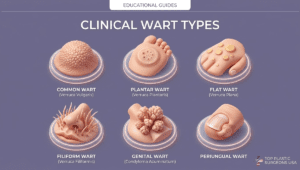
| Type of Wart | Where It Appears | What It Looks Like |
| Common wart | Hands, fingers, knees | Rough, raised bump sometimes with tiny black dots |
| Plantar wart | Sole of the foot | Flat and painful pressed inward by body weight |
| Flat wart | Face, forehead, legs | Small, smooth, skin-colored often in clusters |
| Periungual wart | Around fingernails or toenails | Rough clusters near the nail edge |
The type of wart you have and where it is matters a lot when choosing a wart remover. A treatment designed for a tough plantar wart on the bottom of your foot is often way too aggressive for a flat wart on your face or a common wart near a fingernail.
Why Sensitive Skin Complicates Wart Removal
Most over-the-counter wart removal products work by chemically dissolving the wart tissue layer by layer. That process works great on thick, calloused skin. On sensitive skin, though, the same ingredients can cause redness, burning, and irritation of the skin around the wart, not just the wart itself.
The main culprit is usually concentration. Salicylic acid, the most widely used active ingredient in wart removal products, comes in strengths ranging from 17% to 40%. The higher the concentration, the faster it works but also the more likely it is to irritate the skin around the wart.
If you have ever applied a wart treatment and ended up with a raw, red ring around the wart, that is exactly what happened. The medication spread slightly beyond the wart and started dissolving healthy skin cells too.
Never use high-concentration wart removers on your face, genitals, or near a fingernail without talking to a dermatologist first. These areas have thinner, more reactive skin and a higher risk of permanent scarring or complications. The U.S. News pharmacist panel specifically flags this as a common mistake.
The Best At-Home Wart Treatments for Sensitive Skin
The goal is simple: destroy the wart tissue without destroying the skin around it. Here are the options that work ranked from gentlest to strongest.
1. Low-Concentration Salicylic Acid (17%) : The Gentle Starting Point
For sensitive skin, start low. A 17% salicylic acid gel or liquid like the kind found in products such as Compound W Maximum Strength gel is effective for common warts and plantar warts without being unnecessarily harsh.
According to the American Academy of Dermatology (AAD), the correct method is to soak the wart in warm water for five minutes first, gently file away dead skin with a pumice stone, then apply the salicylic acid directly to the wart, not the surrounding skin. Let it dry completely before covering. Repeat daily.
This approach works because salicylic acid slowly peels away the infected skin cells layer by layer. It is not a one-week fix. Expect seven to twelve weeks of consistent treatment for full wart removal.
2. Salicylic Acid Pads with Protective Backing
One reason salicylic acid irritates surrounding skin is that liquids and gels spread. Medicated pads like Dr. Scholl’s Clear Away Plantar Wart Remover pads or Compound W One Step Pads solve that problem. The pad adheres directly over the wart, keeping the medication where it belongs.
For plantar wart treatment specifically, cushioned pads also relieve pressure while you walk, which makes daily life a lot more comfortable during the treatment period. Dermatologist Dr. Christopher Bunick at Yale Medicine notes that keeping the wart covered also reduces the chance of spreading the virus to other areas of the body.
3. Duct Tape : Surprisingly Useful for Reactive Skin
Duct tape is not glamorous. But for people whose skin cannot tolerate chemical treatments well, it is worth knowing about. The technique involves covering the wart with duct tape, leaving it on for five to six days, then removing it, soaking the wart, and gently filing it with a pumice stone. Repeat until the wart is gone.
The AAD recommends this as a legitimate at-home approach. Some people apply salicylic acid to the wart first, let it dry fully, then cover with duct tape to amplify penetration. The tape creates an occlusive barrier that can boost the effectiveness of chemical treatments especially on thicker plantar warts.
One important note: avoid using duct tape on the face, underarms, or any sensitive area where the adhesive itself may cause irritation.
Dermatologist Perspective
Harvard Health Publishing notes that salicylic acid and cryotherapy have comparable cure rates of around 50–70%. For sensitive skin, salicylic acid at lower concentrations with careful application is usually the smarter first step, saving the stronger treatments for when gentle options have not worked after several weeks. (Source: Harvard Health)
4. Over-the-Counter Freezing Products : Use with Caution on Sensitive Skin
OTC freezing products like Compound W Freeze Off or Dr. Scholl’s Freeze Away use dimethyl ether or propane to rapidly freeze and destroy the wart tissue. They are effective on smaller common warts but are generally less reliable on plantar warts, which go deeper into the skin.
For sensitive skin, these products come with a real warning: they freeze a small area of normal skin around the wart too. That can cause blistering and pain that is difficult to manage if your skin is reactive. Board-certified dermatologist Dr. Carrie LaCour, cited by NBC News, recommends starting with salicylic acid pads before moving to freezing products especially if the wart is near delicate skin.
Also worth noting: the liquid nitrogen used in a dermatologist’s office is significantly colder and more effective than anything available over the counter. If OTC freezing products have not worked after two or three attempts, it is time to consider a professional treatment.
How to Use Wart Removal Products Without Irritating Sensitive Skin
Step-by-Step: Safe Application for Sensitive Skin
- Soak first. Soak the wart in warm water for five minutes to soften the skin. This makes the treatment more effective and reduces irritation.
- File gently. Use a disposable pumice stone or emery board to remove the topmost layer of dead wart tissue. Do not use this tool on any other part of your body you can spread the virus.
- Apply precisely. Put the product directly on the wart only, not the skin around it. A cotton swab gives better control than applying with your finger. Let it dry fully before covering.
- Protect the surrounding skin. Apply a thin ring of petroleum jelly around the wart before treatment. This acts as a barrier so the salicylic acid does not spread to healthy skin.
- Cover the wart. Place a bandage over the treated area. This keeps the treatment in contact with the wart and protects the surrounding skin from accidental exposure.
- Be consistent and patient. Apply once daily. Wart removal takes weeks, not days. The wart should gradually look smaller and paler. Stop if the skin becomes very painful or raw, and give it a few days to recover before continuing.
The Nationwide Children’s Hospital dermatology team also recommends continuing treatment for one to two weeks after the wart appears to be gone; this helps prevent regrowth from any remaining virus-infected skin cells beneath the surface.
Overview
This guide explains the best wart remover options for sensitive skin, including gentle at-home treatments and dermatologist-recommended solutions. How warts develop, why certain treatments irritate delicate skin, and how to safely use salicylic acid, duct tape, and freezing products. You will also learn how to identify different types of warts, and avoid common treatment mistakes. Backed by trusted medical sources, the article focuses on safe, effective wart removal without damaging healthy skin.
Frequently Asked Questions
What is the safest wart remover for sensitive skin?
A 17% salicylic acid gel or medicated adhesive pad is the gentlest starting point for sensitive skin. Apply only to the wart itself and protect surrounding skin with petroleum jelly. Avoid high-concentration formulas (40%) until you know how your skin responds.
Can I use wart remover on my face?
Standard over-the-counter salicylic acid products should not be used on the face. Facial skin is thin and reactive, and these products can cause scarring or severe irritation. See a dermatologist for flat warts on the face prescription treatments or professional cryotherapy are far safer options.
How long does at-home wart treatment take?
Expect seven to twelve weeks of daily treatment for most common and plantar warts using salicylic acid. Some stubborn warts take close to three months. If you see no improvement after twelve weeks, it is time to see a dermatologist rather than continuing to irritate the skin.
Does duct tape really work on warts?
It can, The American Academy of Dermatology lists it as a legitimate at-home approach particularly useful for people who cannot tolerate chemical treatments well. Combining duct tape with a light application of salicylic acid beneath it may improve effectiveness.
Will a wart go away on its own without treatment?
Yes, about 65% of warts resolve on their own within two years, according to the Cleveland Clinic. However, the timeline is unpredictable, and warts can spread to other parts of the body or to other people during that time. Treatment speeds up removal and reduces the risk of spreading.
Are corn remover pads the same as wart pads?
Not exactly, Both often use salicylic acid as the active ingredient, but corn remover pads are formulated for calluses and corns rather than warts. For actual wart removal, use products specifically labeled for wart treatment; the formulation and application approach differ.
References
- Cleveland Clinic – clevelandclinic.org
- Harvard Health Publishing – health.harvard.edu
- Nationwide Children’s Hospital – nationwidechildrens.org
- Yale Medicine – yalemedicine.org
- AAD – aad.org