


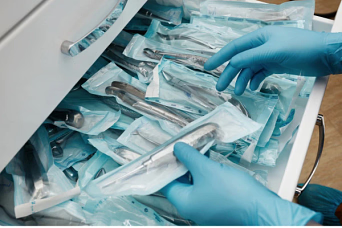
Medical procedures are difficult for patients to endure, not only due to the intervention itself but also due to safety concerns, risk of infection, and the cleanliness of instruments. Ensuring the standards for a safe surgical result, others look upon the sterilization of surgical tools as one of the most critical steps.
Now, how can one be sure of that? What are the processes of cleaning and sterilizing the instruments? Is it the same for all procedures? And what information should the patients be provided with prior to their surgery?
This guide will tackle all these issues using simple language that is easy to follow, so that you can be sure of the safety measures already taken in modern medical facilities.
What Is Surgical Instrument Sterilization?
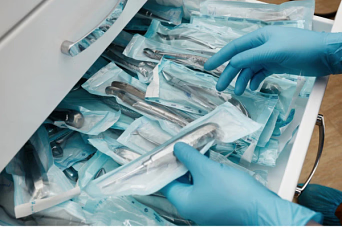
The removal of all microbial entities from surgical tools, such as bacteria, viruses, fungi, and spores, is a process termed surgical instrument sterilization. This standard of cleanliness is above any basic cleaning or disinfection. It is through sterilization that surgery instruments are rendered completely free of pathogens that could lead to serious infections.
A clear comprehension of sterilization can be derived from the analogy of three levels of instrument care:
- Cleaning: The action that eliminates not only the visible dirt but also the organic matter.
- Disinfection: Performed on many microorganisms but not on all of them.
- Sterilization: Total destruction of all microbial life, including resistant spores.
As per the Centers for Disease Control and Prevention (CDC), sterilization is the necessary level of processing for instruments that either penetrate sterile body sites or come into contact with blood and body fluids.
This is not optional; it’s an essential part of infection control practices in hospitals and clinics worldwide.
The Importance of Patient Instrument Safety
Infection is always a possibility with any surgery or invasive medical treatment. Surgical site infections (SSIs) are those that are caused by dirty tools used in surgery. These infections can:
- Prolonged hospital stays
- Require additional treatment or antibiotics
- Delay recovery
- Increase healthcare costs
- Lead to severe complications in vulnerable patients
Rutala & Weber’s overview in the American Journal of Infection Control explains how instruments that contact sterile tissue require sterilization and reinforces the importance of strict adherence to these principles.
If sterilization is not done properly, instruments may still contain bacteria or viruses, which could be directly introduced into the sterile part of the body during the operation. It is absolutely necessary, however, to eliminate infectious germs in patients with compromised immune systems.
Step‑by‑Step: From Cleaning to Sterilizing Medical Equipment
Every instrument used in surgery must undergo a careful multi‑step process before it’s safe to use. This is not just a “rinse and repeat” method; it is a well‑regulated series of procedures designed to protect patients and healthcare workers.
1. Pre-Cleaning and Decontamination
The first step is to rinse or wipe the instruments immediately after use to prevent blood and tissue from drying. It is very difficult to remove dried organic material, and at the same time, it can withstand microbial action during the later steps.
2. Cleaning of Surgical Instruments
Cleaning is a mandatory step preceding sterilization since organic material (e.g., blood or tissue) can offer a layer of defense to bacteria against the sterilizing agents. Cleaning comprises:
- Manual cleaning: Scrubbing with soft brushes and using medical detergent while water is running.
- Ultrasonic cleaning: The instruments are placed in ultrasonic tanks where the sound waves assist in dislodging the debris from the tiniest of cracks.
- Automated washer-disinfectors: Machines that carry out both cleaning and disinfection simultaneously, thereby limiting the exposure of the personnel to contamination.
Cleaning is not a synonym for sterilization, but still, without cleaning, the efficiency of sterilization may not be optimum.
3. Sterilization of Surgical Equipment
The instruments, after cleaning, are then prepared for sterilization. Below are the primary methods that are used in hospitals:
- Steam Sterilization (Autoclaving)
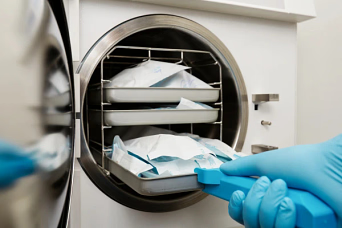
This is the most widely accepted and trusted method. The instruments are kept in an autoclave, where moist heat and pressure (typically 121-134°C) kill all microorganisms. Steam sterilization is efficient, quick, and eco-friendly.
- Ethylene Oxide (EO) Gas Sterilization
This method is utilized for the instruments that are sensitive to heat and would be adversely affected by steam. EO gas penetrates complex instrument designs and effectively sterilizes without heat. However, because ethylene oxide is toxic, strict safety controls are required.
- Chemical Sterilization
Certain instruments may be soaked in chemical solutions like glutaraldehyde or peracetic acid. This method can be used to sterilize at low temperatures, but it usually takes longer and requires careful handling.
- Dry Heat Sterilization
In dry heat ovens, instruments are sterilized at high temperatures without moisture. This method is ideal for powders and sharp tools that may corrode in the presence of moisture.
Other Technologies
- Hydrogen Peroxide Plasma: Fast, low‑temperature sterilization for delicate tools.
- UV‑C Light Sterilization: Used as a supplementary step for surface sterilization.
How Hospitals Ensure Sterilization Works
Hospitals don’t just put instruments in a machine and hope for the best. There are checks and balances in place, including:
Biological Indicators
These are tests using resistant spores to confirm that the sterilization cycle has successfully killed microorganisms.
Chemical Indicators
Color‑changing strips or tapes show that instruments were processed at the correct temperature and pressure.
Documentation and Tracking
Instrument trays are labeled, tracked, and logged so staff know exactly when they were sterilized and when they expire.
Staff Training
Regular training ensures that technicians and nurses consistently follow the correct procedures.
Common Mistakes and Risks in Sterilization
Even with protocols in place, mistakes can happen:
- Skipping or rushing cleaning
- Incorrect instrument packaging
- Overloading sterilization equipment
- Using broken or malfunctioning sterilizers
- Improper storage after sterilization
Each of these errors increases the risk of contamination. That’s why healthcare facilities use layered checks, training, and quality reviews.
Patient Questions People Search About Sterilization
These are some actual inquiries that patients regularly make online, and the responses are simple to understand:
1. How long does sterilization take?
The duration of the sterilization process varies according to the method employed. The duration for the steam autoclaving process typically ranges from 30 to 60 minutes, and the actual time is determined by both the type of instruments and their number.
On the contrary, the gas or chemical sterilization method might take several hours to finish its process.
2. Are there any germs left on the instruments after sterilization?”
In case the tools are properly cleaned and sterilized with validated methods, then no microorganisms will be present at any stage. That’s the definition of sterilization.
3. Are all surgical instruments reusable?
Not all instruments are reusable. Some are single‑use disposable. Reusables must be cleaned and sterilized correctly.
4. Is sterilization standardized worldwide?
Yes. Organizations such as the World Health Organization (WHO) and the CDC publish global standards that hospitals follow.
What Patients Can Do Before Surgery
Patients can ask a few simple questions to feel more confident:
- “What sterilization methods does this facility use?”
- “Are instruments disposable or reusable?”
- “Can you explain your infection control protocols?”
Healthcare teams expect these questions and should answer them clearly and respectfully.
The Difference Between Cleaning, Disinfection, and Sterilization
| Process | Removes Visible Debris | Kills Most Microbes | Kills All Microbes |
| Cleaning | Yes | No | No |
| Disinfection | Sometimes | Yes (not spores) | No |
| Sterilization | Yes | Yes | Yes |
This table shows why cleaning alone is not enough for surgical tools.
Conclusion
Understanding sterilization and instrument safety is not only for healthcare workers but also for patients about to undergo a procedure, as this is very important information for them. Every step from cleaning surgical instruments to the use of advanced sterilization technology is meant to protect you and improve your recovery.
Infection risk becomes extremely low when medical instruments are cleaned, processed, and sterilized according to proper procedures. Hospitals apply strict protocols, biological indicators, and continuous staff training, among other measures, to guarantee compliance with these standards at all times.
As a foremost global supplier of top-grade surgical instruments, GerMedUSA provides the tools that are fit for the best performance and safety, thereby assisting healthcare professionals in the maintenance of the highest standards of sterilization and patient care.
FAQs
1. How often should surgical instruments be sterilized?
An instrument is considered dirty if it is to be used in a sterile area of the body or comes in contact with blood or tissue. Consequently, sterilization is required after every use.
2. Can I sterilize medical equipment at home?
Not at all. Sterilization calls for specialized equipment and principles validated scientifically. The cleaning and sterilization of surgical instruments are processed under two different names; the cleaning takes away visible debris, and the sterilization envelops all the microorganisms. Testament to the above, the two are necessary and well done all the time.
3. Are disposable instruments safer than reusable instruments?
The use of disposable instruments reduces the risks that come with the various errors arising from sterilization, but they are not suitable for all procedures. Reusable instruments, however, when sterilized properly, pose no such risks.
4. Are children at higher risk from poor sterilization?
Children may be more vulnerable because of developing immune systems, which makes proper sterilization even more critical.
References
- Rutala, William A.; Weber, David J. “Disinfection, Sterilization, and Control of Hospital Waste” (5th Edition). John Wiley & Sons.
Standard text used in infection control training and policy development. - AORN (Association of periOperative Registered Nurses). “Guideline for the Care and Cleaning of Surgical Instruments”.
Clinical guidelines widely adopted in perioperative nursing and sterile processing. - Spaulding, E. H. “Chemical Disinfection and Antisepsis in the Hospital” (Classic classification work).
Foundational reference on risk categories and processing levels. - Centers for Disease Control and Prevention (CDC) Guideline for Disinfection and Sterilization in Healthcare Facilities, 2008.
Provides detailed, evidence-based recommendations on all steps of instrument reprocessing, sterilization methods (steam, EtO, low-temperature technologies), cleaning requirements, and monitoring. (“Sterilization | Infection Control”) - CDC Sterilization and Disinfection of Patient-Care Items Defines instrument categories (critical vs. semicritical), appropriate processing, and monitoring protocols. (“Sterilization and Disinfection | Dental Infection Prevention and Control”)
- World Health Organization (WHO) Decontamination and Reprocessing of Medical Devices for Health-Care Facilities (WHO Manual, ISBN: 9789241549851).
Official guidance on sterilization infrastructure, standard procedures, and international best practices. (“Decontamination and reprocessing of medical devices for health-care facilities”) - World Health Organization (WHO) Global Guidelines for the Prevention of Surgical Site Infection (SSI, 2016/2018).
Includes recommendations on infection control measures related to instrument sterilization and SSI prevention. (“Decontamination and reprocessing of medical devices for health-care facilities”) - Spaulding Classification (Wikipedia) Classic risk-based scheme for categorizing medical devices into critical, semicritical, and noncritical items. (“Spaulding classification”)
- U.S. Food and Drug Administration (FDA) Sterilization for Medical Devices.
Explains regulatory expectations and methods such as ethylene oxide for devices, including risk mitigation. (“General Hospital Devices and Supplies – Sterilization for Medical Devices”) - GerMedUSA Inc. Top Manufacturer and supplier of surgical equipment.
GerMedUSA instruments are utilized in clinical practice, surgical procedures, and medical training environments. (“A Comprehensive Guide On Cleaning Surgical Instruments”), (“10 Common Mistakes in Sterilization of Surgical Instruments and How to Avoid Them”) - AAMI (Association for the Advancement of Medical Instrumentation) ANSI/AAMI ST79: Comprehensive guide to steam sterilization and sterility assurance in health care facilities.
Widely used professional standard outlining best practices for cleaning, packaging, sterilization, monitoring, and storage of reusable surgical instruments. - International Organization for Standardization (ISO) ISO 17665: Sterilization of health care products Moist heat.
Defines internationally recognized requirements for validation and routine control of steam sterilization processes for medical devices.
